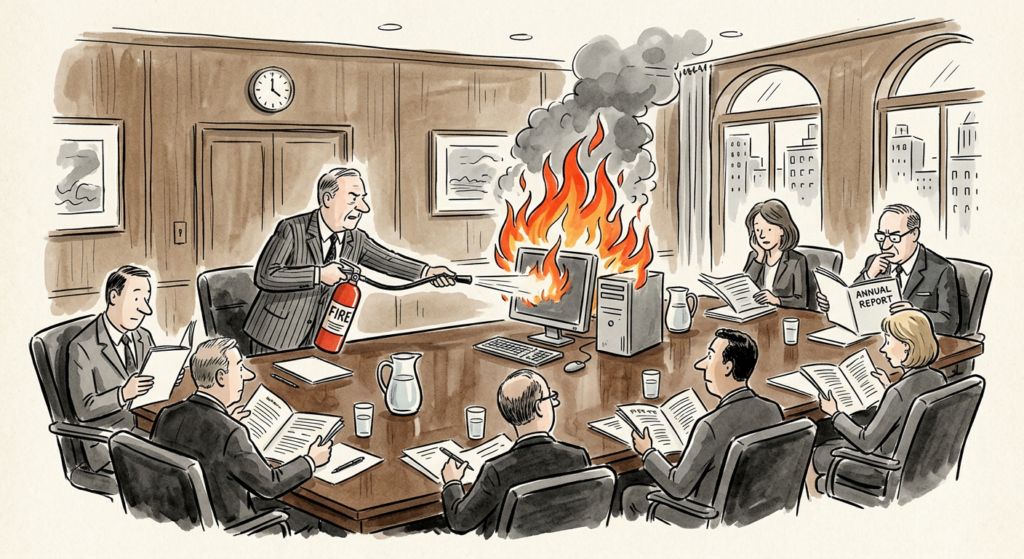
A cluster of attacks on maritime and logistics firms, combined with Hong Kong’s first ransomware-related enforcement fine, signals a turning point: the era of quiet breaches and zero consequences is over.
For years, Hong Kong’s maritime and logistics sector has operated under a comfortable, if unspoken, arrangement with cybersecurity: invest minimally, disclose nothing, and hope the attackers stay focused on bigger targets elsewhere. That arrangement is now falling apart from both directions. Threat actors have identified the city’s shipping and trade services firms as soft, high-value marks. And regulators, historically content to issue guidance rather than penalties, have started writing checks that hurt.
The evidence from the past six months is difficult to dismiss as isolated bad luck.
A pattern, not a coincidence
In a case documented by incident response firm Black Panda, the Akira ransomware group breached a Hong Kong maritime investment company through a VPN gateway that lacked multi-factor authentication. The attackers moved laterally through the network, compromising Veeam backup infrastructure and Hyper-V hosts before deploying encryption. The entry point was as basic as it gets: a single-factor VPN login, the cybersecurity equivalent of leaving a warehouse roller door propped open with a cinder block.
Separately, a previously unknown strain dubbed “Bert” ransomware infiltrated a Hong Kong shipping company and persisted inside the network for weeks before detonating. Extended dwell time of that kind is enough to exfiltrate commercial data, map customer relationships, and understand exactly which systems would cause maximum operational disruption when encrypted. The company had no endpoint detection and response capability, and its security monitoring amounted to periodic manual log reviews. (
Then in early August, a brand-new group calling itself “Orova” announced its arrival by simultaneously claiming five Hong Kong firms as victims, including SSI Holding (Far East). The group posted stolen data to its leak site on the same day the Securities and Futures Commission issued its first ransomware-related enforcement action: a HK$2.1M fine against Luk Fook Securities for internal control deficiencies that allowed attackers to access client data.
The regulatory turn
The SFC fine matters beyond its modest dollar value. Hong Kong regulators have historically preferred private warnings and remediation orders over public penalties for cyber incidents. The decision to fine a firm not for the breach itself, but for the underlying security deficiencies that enabled it (specifically, failures in access controls, network segmentation, and data protection) sets a precedent that will not be lost on compliance teams across the logistics sector.
More significantly, the Protection of Critical Infrastructures (Computer Systems) Ordinance, passed in mid-2025 and now being implemented with a formal Code of Practice, designates transport and logistics as a critical sector. Designated operators face mandatory security obligations: risk assessments, incident reporting within tight timescales, and regular audits. The Commissioner’s office is operational and empowered to impose penalties for non-compliance.
For shipping companies, terminal operators, and freight forwarders that have spent years treating cybersecurity as an IT cost center rather than a board-level risk, the regulatory ground has shifted beneath them.
Why maritime remains uniquely exposed
The pattern across these incidents reveals consistent, basic failures: no MFA on remote access, no network segmentation between corporate IT and operational systems, no endpoint detection, no tested incident response plan. These are not sophisticated zero-day exploits. They are opportunistic attacks exploiting hygiene failures that most enterprises outside maritime addressed years ago.
The reasons are structural. Hong Kong’s maritime sector is dominated by small-to-mid-size firms (shipowners, managers, brokers, trade finance houses) with lean IT teams and minimal security budgets. Many rely on legacy systems with long replacement cycles. Staff turnover is high, and cybersecurity awareness training is frequently treated as an annual compliance checkbox rather than an operational discipline.
The commercial incentives have also worked against investment. Until now, a firm that suffered a breach could remediate quietly, notify affected clients privately, and avoid public disclosure. With no regulatory penalty and no reputational cost, the rational economic decision was to underinvest in prevention and absorb the occasional loss.
What changes now
That calculus has flipped. The SFC fine makes cyber failures a matter of public enforcement record. The Critical Infrastructures Ordinance makes reporting mandatory and non-compliance punishable. And the frequency of attacks (Akira, Bert, Orova, all within months of each other) means insurers are paying attention too. Expect cyber insurance premiums for Hong Kong maritime firms to rise, and expect underwriters to demand evidence of MFA, EDR, and tested backup recovery before writing coverage.
The losers are obvious: under-resourced firms that have deferred investment and now face simultaneous pressure from regulators, insurers, and criminal operators. The winners, such as they are, will be managed security providers and incident response firms who have spent years building Hong Kong-specific maritime expertise while waiting for the market to care.
The open question is whether the wake-up arrived early enough, or whether the next Bert-style attack hits a firm whose operational disruption ripples across an entire trade lane.