“Society in every state is a blessing, but government, even in its best state, is but a necessary evil.”
Thomas Paine, Common Sense, 1776
From my home in Hong Kong, I spoke to a reporter about a court ruling. I disagreed with part of the decision, said my clients intended to seek leave to amend, and expressed satisfaction that their other claims had survived. Three sentences. Nothing particularly inflammatory.
A little more than two weeks later, a courtroom official informed me that a judge was ordering my attendance at a hearing in the middle of the night. I asked for a copy of the order. None arrived. I explained that I was being treated for a serious illness and was taking several medications, including opiates. I was told to appear anyway. I was not given notice of the accusations against me. I was not given an opportunity to obtain a lawyer. The things that I said couldn’t happen here, were suddenly happening to me.
At the hearing, the judge brought up my remarks to the press. She was upset that I had told the press I had respectfully disagreed with her decision. As I recall, she also accused me of contempt for missing an earlier hearing. When I tried to explain my status as a Hong Kong solicitor, I was interrupted. When I tried to raise a concern about a possible conflict of interest, I was muted. In another window sat a young Hong Kong resident who had been burned over a third of her body, watching the lawyer who had tried to help her by holding the company responsible accountable being silenced.
If you have been reading Western newspapers lately, you probably think you know where this story is going. A lawyer in Hong Kong speaks to the press, a judge demands answers, and the machinery of authority closes around him. Another casualty of the disappearing rule of law. Another example of what happens to people who speak their minds in China.
Professor Stephen Roach, who has spent the past few years telling the world that the Hong Kong of old is over, might find the story particularly familiar.
There is, however, one small problem with that interpretation.
The judge was not in Hong Kong.
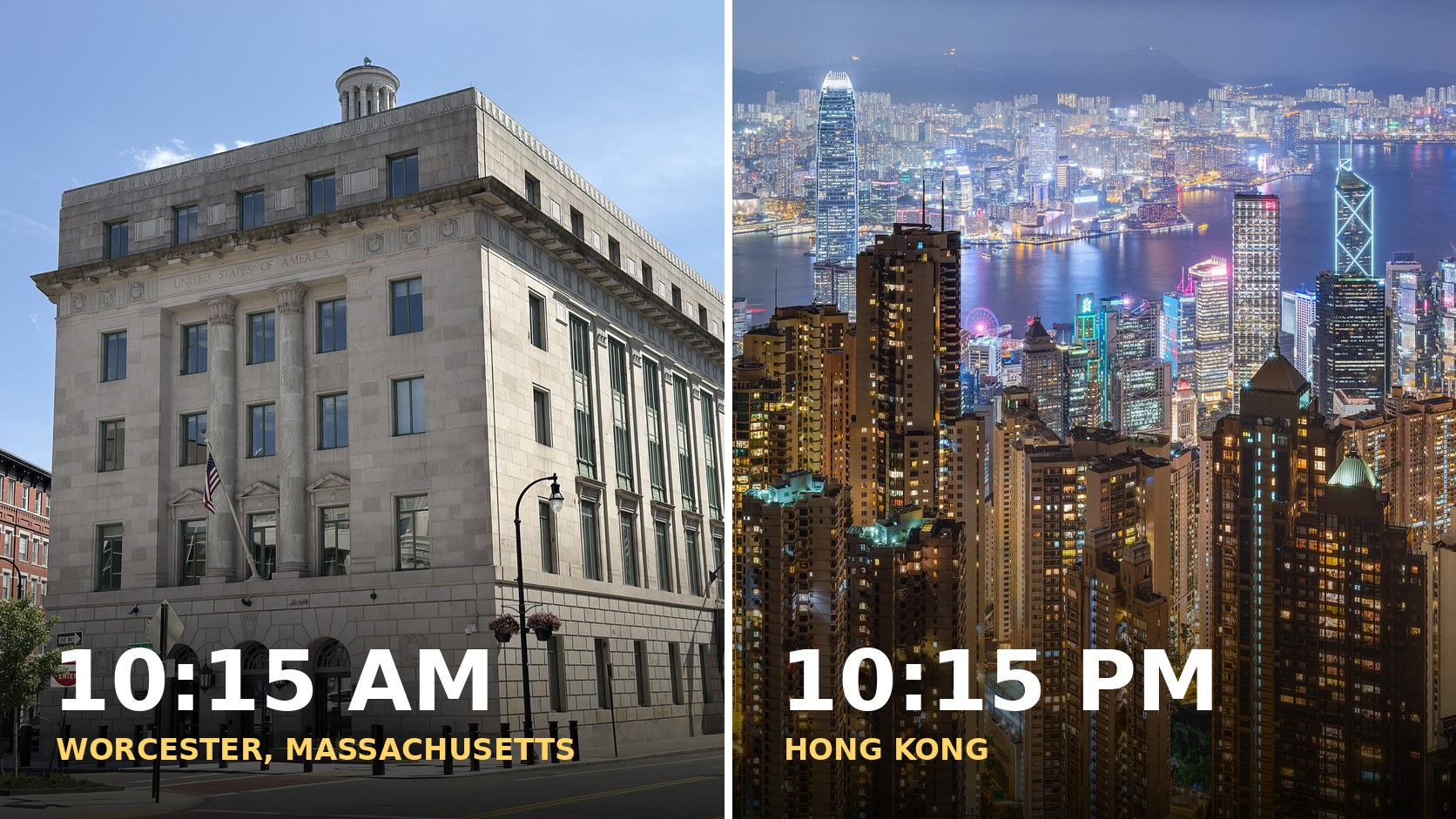
Her name is Margaret R. Guzman. She is a United States district judge, and her courtroom is in Worcester, Massachusetts. It was 10:15 on a Friday morning there. I was sitting in Hong Kong, where it was 10:15 at night, staring at her on a computer screen.
In more than a decade appearing before Hong Kong judges, not one has ever muted me. Not one has ordered me to take down a video warning the public about a dangerous product. Not one has challenged my right to speak to the press about my clients.
An American federal judge did.
At 10:15 on a Friday night in Hong Kong, I clicked a ZoomGov link and appeared before a federal judge in Worcester, Massachusetts, where it was 10:15 in the morning. The courtroom deputy had written that the judge was “ordering your attendance.” I had asked to see the order. I never received one. I had also written to the court the day before to say that I was being treated for a serious illness and was taking several medications, including opiates. Within a few minutes of the call starting, I was being told I was in contempt of court. Each time I tried to answer, I was cut off. On a screen in another tile sat my client, a young woman burned over a third of her body, watching her lawyer apologize so that it would stop.
I want to tell you how I got there. And then I want to put a question to the man who says my adopted city is finished.
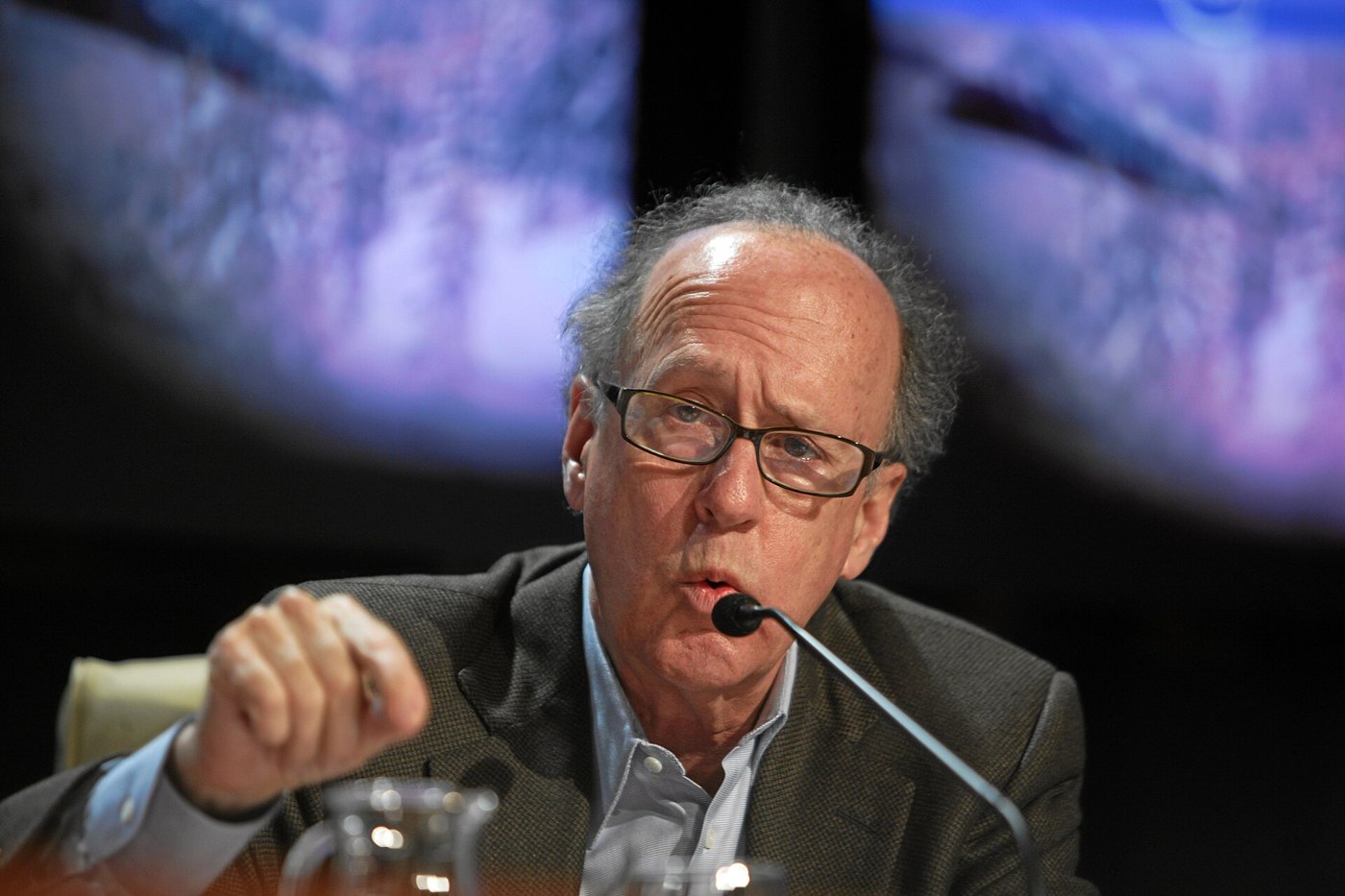
Stephen Roach Says the Hong Kong of Old Is Over
Stephen Roach is a Yale senior fellow and a former chairman of Morgan Stanley Asia, and he writes a Substack called Conflict, with a subscribe button at the top and another at the bottom. He has said he writes to stimulate and provoke feedback. I suspect he also writes proactively to funnel people to his subscription base. It works. On July 23 he argued that the Hong Kong of old is over. He pointed to the national security law and Article 23, to the foreign judges who left the Court of Final Appeal, to the expatriates who packed up, and to an IPO revival he waved away because the companies listing were mainland ones like CATL and Luxshare.
I am an American that stayed. I answered him, and so did Deputy Financial Secretary Michael Wong and Virginia Lee. My answer was that he had described a city doing its job. Hong Kong is the only place on earth that joins Western capital markets to China’s domestic economy with common law courts, free movement of capital and no capital gains tax. It took the global IPO crown in 2025 because the world’s largest battery maker and a key Apple supplier chose to list here. Contracts are enforced. The courts sit. The international law firms are still here, and so am I. Roach built a career running Morgan Stanley’s Asia business out of this city, and the Chinese listings he now dismisses were the reason that business existed.
On August 2 he called the three rebuttals “especially impressive,” and then rejected my comparison of Hong Kong to New York and London. It was a gracious exchange and nobody won. A man who declares a place over, and then reads the people from that place who disagree with him, has earned a serious reply. Here it is. Roach made much of the foreign judges who left Hong Kong’s Court of Final Appeal. I understand why that worries him. But I stayed, and I have appeared before Hong Kong judges for more than a decade, and not one has ever muted me. The courtroom where I was silenced was in Worcester, Massachusetts. So I have come back from the past year with a different question for him.
The Judge Who Promised to Be Fair
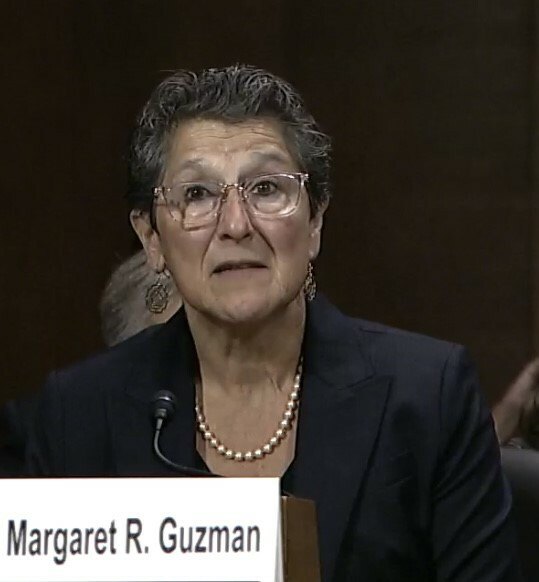
In January 2024, Clark University’s news service ran a profile of Judge Margaret Guzman under a headline that doubled as a pledge: “I’m going to be fair, and I’m going to bring a different voice.” I read it twice, because I wanted to believe it. She was born in Worcester in 1960, one of eight children raised by a single mother who relied on food stamps and free school lunches. She started college at 25, finished at Clark in 1989, and took her law degree at Boston University in 1992. She spent thirteen years as a public defender in Worcester, in the same courtrooms where I once stood up for people nobody else would stand up for, and fourteen more on the state bench. In 2023 she became the first Latina lifetime federal judge in Massachusetts, confirmed on a tie-breaking vote by the vice president. As a teenager she wrote to the Red Sox asking to be their first batgirl for a day. Manager Don Zimmer said no. I like her for that letter, and I do not say it ironically.
She promised to be fair, and she promised to bring a different voice. She kept the second promise. On the first, I will give you the docket and let you decide. I will only tell you now that the person on the receiving end did not experience fairness. She is not known for being hard on the people in front of her. A 2012 report for the Supreme Judicial Court found that she had acquitted all 149 defendants in her drunk-driving bench trials over the period studied. The report found no misconduct, and I do not suggest any. It does make you wonder why the benefit of the doubt ran out when the person in front of her was a lawyer warning the public about an alcoholic beverage that sets young college students on fire when used in accordance with the bottler’s instructions.
Two Kids From Mill Country
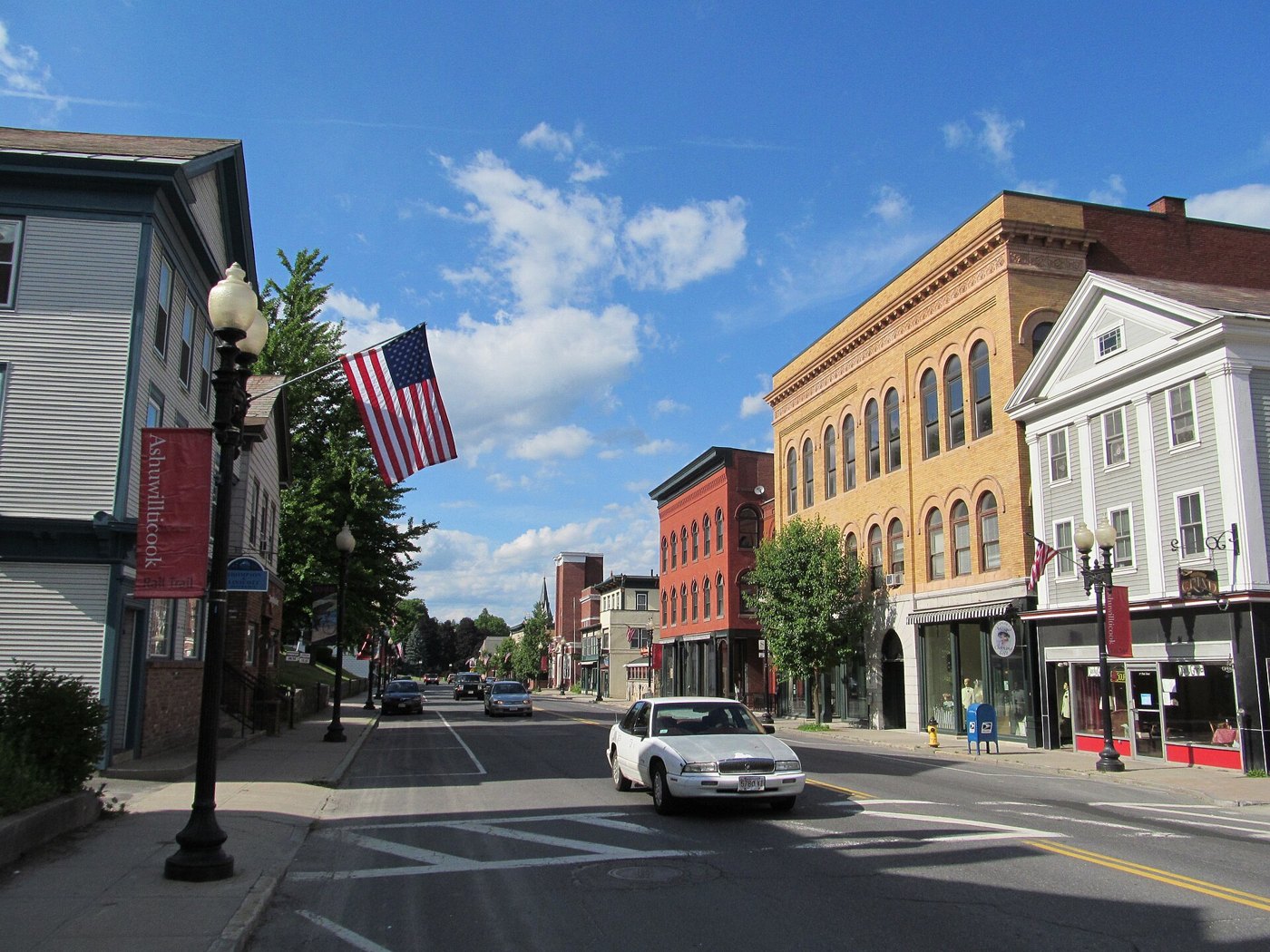
I come from Adams, Massachusetts, born in 1970, in a town where “places to be” usually meant another bar between another church. My mother worked in a mill. My father was a graphic illustrator at General Electric. My grandfather worked at the Arnold Print Works in Adams. We were the people who wore last year’s clothes and fixed things instead of replacing them. Nobody handed me anything. I worked in the local laundry, then served in the 1st Infantry Division. The Army paid my tuition and loans covered the rest, and I graduated magna cum laude from Boston University School of Law in 1998, six years after she did. Two kids from Massachusetts mill country, one law school, both of us defending people in Worcester whom nobody else wanted to defend.
I tell you this so you understand that I did not walk into her courtroom as an enemy. I walked in as someone who should have recognized her, and whom she should have recognized.
The Call That Came at Night
The call came at night, as these calls do. Lordever Digan, a Filipino friend and a Hong Kong permanent resident, could barely get the words out. His daughter Yvette, a law student at City University of Hong Kong and a singer and musician, had flown to Boston for a summer exchange program at Boston University, where Judge Guzman and I both went to law school. Days after she arrived, she was in the burn unit at Massachusetts General Hospital. At a fraternity gathering in Worcester, someone had poured Everclear onto a backyard fire, and the fire had come back out of the bottle and onto her.
She was 22. She had come to America in search of a bigger life, the way her parents had once left the Philippines in search of one. What she got instead was a lesson in how the American system treats people with no voice and little power. She has had multiple surgeries. She is now a student at Suffolk University in Boston, because she still wants to be a lawyer. And, believe it or not, the Guzman name runs in her own family line.
What Is Everclear?
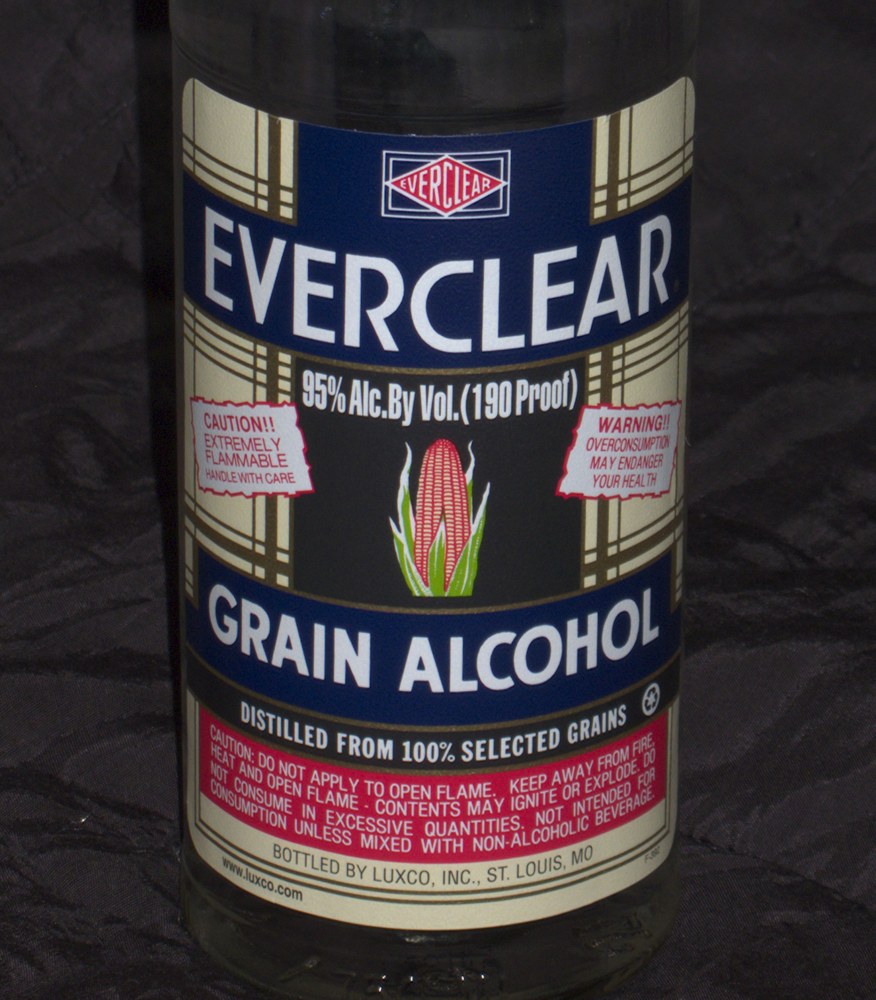
Everclear is 190-proof grain alcohol, 95 percent ethanol, and it looks exactly like water. Its trademark was registered in 1950 by the American Distilling Company, though VinePair, in “How Everclear Became the King of Grain Alcohol,” found the product in a 1922 druggists’ catalog. Luxco, of St. Louis, bought it in 1981. Everclear is not the only grain alcohol, or even the oldest; Boston’s Graves Grain Alcohol has been sold at the same proof since 1860. But Everclear accounts for more than 80 percent of grain alcohol sales in America, according to National Alcohol Beverage Control Association data cited by VinePair, and Luxco sells the same kind of spirit under two other names, Golden Grain and Crystal Clear. For most of its life, nobody marketed it at all. In 2015, a Luxco brand manager asked a reporter, “how could you responsibly talk about it, knowing the reputation that it has?”
More than a dozen states ban the 190-proof version outright. Massachusetts is not one of them, whatever you may read on the internet. It is legal, it is on the shelf at a liquor store near every campus in the Commonwealth. That is the marketing strategy. So the question is how it was labeled and how it was sold.
Who Owns Everclear: MGP Ingredients
Since April 2021, Luxco has belonged to MGP Ingredients, a Kansas company on the Nasdaq, which paid about $475 million for it. MGP’s chief executive since July 2025 is Julie Francis, formerly of Schwan’s, Constellation Brands and Coca-Cola, and Donn Lux, who ran Luxco for three decades, sits on MGP’s board. MGP joined the Distilled Spirits Council of the United States, the industry’s lobby, in 2015.
The merger has not gone the way MGP planned. In the fourth quarter of 2025, it wrote down $152.6 million of goodwill and brand value in its Branded Spirits segment, the business it bought from Luxco, and booked a full-year loss of $107.8 million. In the second quarter of 2026, its Distilling Solutions sales fell 42 percent and its whiskey sales 59 percent, as an American whiskey glut left warehouses full and distilleries idle. In all that gloom, one brand shines. On July 29, management told investors that Everclear grew 13 percent, “reflecting increased consumer engagement in key consumption occasions.” I suspect I know one of those occasions. Search for how to make a cannabis tincture at home, and guide after guide tells you to use Everclear.
The Warning Luxco Took Off the Bottle
For decades, every bottle of Everclear carried this on the front, in a red box:
“CAUTION: DO NOT APPLY TO OPEN FLAME. KEEP AWAY FROM FIRE, HEAT AND OPEN FLAME – CONTENTS MAY IGNITE OR EXPLODE. DO NOT CONSUME IN EXCESSIVE QUANTITIES. NOT INTENDED FOR CONSUMPTION UNLESS MIXED WITH NON-ALCOHOLIC BEVERAGE.”
The front of the bottle also contained additional warnings to alert consumers to the hazardous nature of the product, providing: “CAUTION!! EXTREMELY FLAMMABLE – HANDLE WITH CARE,” and “WARNING OVERCONSUMPTION MAY ENDANGER YOUR HEALTH.”
Around 2018, during a redesign, the box disappeared. In its place, on the back of the bottle, in a strip that blends into the design, Luxco printed six words: “Warning: Flammable liquid. Handle with care.”
Now hold this next fact in your mind. Luxco kept the full warning on Golden Grain and Crystal Clear, the same kind of 190-proof spirit sold under its other names, and the Golden Grain back label still reads “DO NOT USE THIS PRODUCT FOR FLAMING DISHES OR DRINKS.” One product, three bottles, and the warning came off only the one that young people know by name. Removing a warning saves no money. It adds legal risk. I have tried for more than a year to think of a business reason for it, and the only one I can find is that a warning gets in the way of a product being sold for every occasion.
The federal label application for the new Everclear label was signed by John Rempe, Luxco’s master distiller, on September 8, 2017, and approved by the Alcohol and Tobacco Tax and Trade Bureau on September 20. Rempe had signed the same kind of form years earlier for Crystal Clear, with the full flame warning on it. He knew the product. He knew what the warning was for.
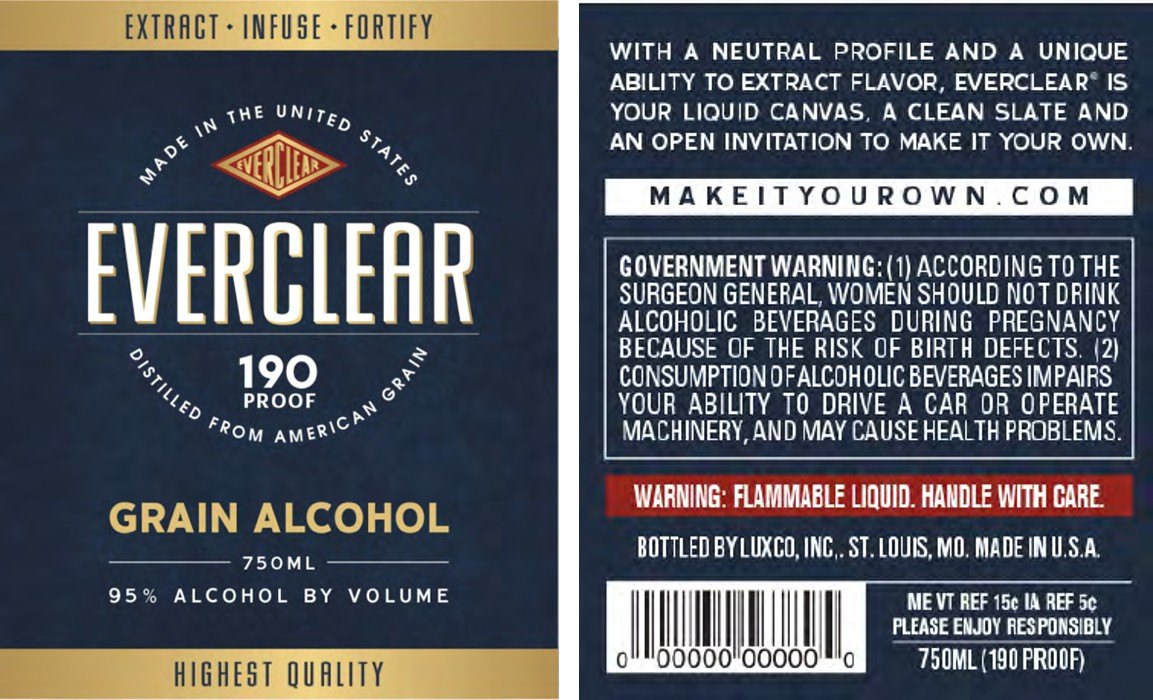
The post-2018 Everclear label, front (left) and back (right). The large red front-label flame warning is gone. The only warning is the red strip on the back, “WARNING: FLAMMABLE LIQUID. HANDLE WITH CARE.” Images from Luxco’s federal label application
Meanwhile, the marketing turned a corner. In 2014 Luxco launched “Make It Your Own,” a hub of infusions, limoncello and bitters. By 2021 a campaign called “A Blank Liquid Canvas” had a brand manager saying Everclear should be “a staple in every household.” A James Beard Award winning chef, Kevin Nashan, filmed himself lighting it for cherries jubilee. Light 190-proof alcohol in a pan and the fire is the point of the recipe. That is not the part that burns people.
What Is Flame Jetting?
The part that burns people has a name, flame jetting, and almost nobody has heard it. Ordinary 80-proof spirits are mostly water and hard to light at room temperature, which is why most people have never seen a bottle of vodka do this. Everclear is 95 percent alcohol. Pour high-proof alcohol from a bottle onto a flame, or into a container where a flame is still burning, and the vapor inside the bottle can ignite. A 2018 paper in the International Journal of Environmental Research and Public Health by Log and Moi describes what happens next: “It is highly probable that the flame will propagate into the container and ignite the internal combustible air fuel gas mixture. As the internal gas volume ignites, the resulting volume expansion displaces the liquid in the bottom of the container which is then violently released through the container opening.”
The bottle becomes a flamethrower, and it points at the person holding it and whoever is standing close. The Consumer Product Safety Commission, which has spent years warning about alcohol-burning tabletop fire pits, says ethanol burns at more than 1,600 degrees Fahrenheit and can cause third-degree burns in less than a second, and that a small flame can be too faint to see, so people pour onto a fire they do not know is lit. Everclear is clear and odorless, so it gives no warning of its own. Ordinary people do not know any of this. Luxco did. That is what the red box was for. The safety data sheet for 95 percent ethanol describes “exceptional and unique fire hazards.” Bacardi, before it pulled its 151-proof rum from the market, put a flame arrestor in the neck, a small screen that stops a flame from traveling back into the bottle. Luxco, which markets Everclear to young adults for use around fire, never did.
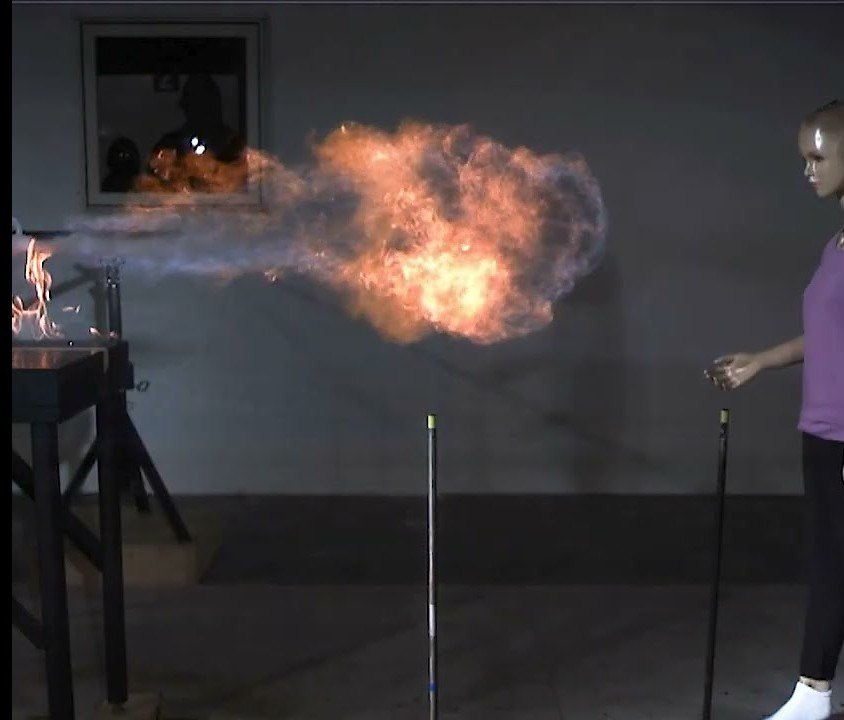
The Consumer Product Safety Commission has made a short video of flame jetting, and it is worth a minute of your life: CPSC flame jetting demonstration.
The internet, meanwhile, does the advertising, and it is not always clear who pays for it. Tipsy Bartender, an online party-drinks brand with a large following on YouTube and TikTok, posts videos like “Flaming Tree Smacker,” in which Everclear is set alight for the camera. Its website gives the recipe for a Flaming Melon: two ounces of melon liqueur, half an ounce of Everclear on top, then “Ignite Everclear,” “Blow out flame,” “Shoot.” This is how a product grows on social media now. The brand supplies the bottle and the influencers supply the fire. Luxco has paid influencers before; its 2021 “A Blank Liquid Canvas” campaign was built around three of them. I do not know whether it pays Tipsy Bartender. I do know Tipsy Bartender knows about the burns, because I told them. The videos are still up.
The People It Burned
In January 2016 in Toledo, a runner named Janelle Noe was burned over more than half her body when Everclear was poured on a lit candle at a party. In August 2024 in Dallas, Abigael Hance-Briscoe and Dustin Johnson were burned when a bartender attempted a flaming cocktail with Everclear. In December 2024 in Binghamton, New York, a softball player named Makenna DeMoney was burned when a bartender relit a shot made with Everclear. Her lawsuit says the fireball “engulfed Plaintiff’s head, face, neck, chest, arms and hands. The flaming liquid stuck to Plaintiff’s skin like napalm as she attempted to run to the bathroom to extinguish the flames.” Her injury was caught on video. That footage was in the video Judge Guzman ordered me to take down.
Massachusetts has its own. On July 11, 2020, in Fairhaven, a man named Jeffrey Maxwell was burned across his body when his host lit Everclear in a clay chouriço roaster. In November 2024 in Lakeville, a man cooking the same dish was flown out by helicopter with serious burns, and a young girl was burned too. A deputy fire chief called it a freak accident. State Fire Marshal records I later obtained confirm that Everclear was the fuel in both. And on May 13, 2025, in the backyard of a fraternity house in Worcester, it was Yvette.
Who Had the Chance to Stop This?
I did not write this because I think it will change much. I wrote it so that the next family, and there will be one if nothing is done, can read who had the chance to stop this and did not. I went to each of them in turn.
Bring it home with me first. If someone in Adams took the warnings off a gas can and then told the town it was fine to use around open flames, he would be run out of town on a rail before the second Saturday. One incident would do it. Everclear had incident after incident, and I assumed that once the authorities were told, it would be the easiest call of their careers.
The State Fire Marshal
The first person I called was the State Fire Marshal, Jon Davine, a man I grew up with in Adams. I told him what had happened to Yvette. He was concerned that his office had not been notified of her injury, as Massachusetts law requires, and that he was hearing it from a private lawyer in Hong Kong. What he did not tell me was that his office already knew about Lakeville. When I found out on my own and confronted the office about it, I was referred to its general counsel. My correspondence with the Department of Fire Services is attachment 3 to the complaint, filed publicly as ECF 1, and anyone can read it. His office acknowledged the danger and said it was powerless to do anything about it. What it was not powerless to do was pick up the phone to the agencies that did have the power. It did not. Jon, you still can. You are from Adams too, and I will come back to that.
The Alcoholic Beverages Control Commission
Next was the Alcoholic Beverages Control Commission. Ted Mahony, its chief investigator, called me back around eleven on a Friday. He listened. He told me it had been on his desk, and that it had killed a kid down in Chicopee from alcohol poisoning. His voice dropped when I explained the 2018 label change. “This shouldn’t be happening,” he said. Over the next few days we exchanged emails, and one of them raised the possibility of emergency regulations. I began to breathe easier. Then the replies stopped. No explanation. No discussion. They just stopped. I believed Mahony then and I believe him now; of everyone I contacted, he sounded the most genuine, and I am usually a good read of people. A sincere investigator at an agency that licenses sellers, while label content is approved in Washington, can only do so much.
The Massachusetts Attorney General
Then the Attorney General, whose office holds the Chapter 93A power to act against an unsafe or deceptive consumer product without waiting years for a trial. I sent a detailed letter: the injuries, the pattern, the label, the marketing. The response was silence. Not even a form letter acknowledging receipt. A year later, Everclear is on the same shelves with the same label.
The Retailer, and the University
If the state would not act, I thought the people who sold it might. On June 1, 2025, I wrote to the general counsel of Total Wine & More, which sold the bottle used at the party, and sent him the video of Yvette being engulfed. I was not threatening to sue. I wanted them to warn customers. He wrote back that Total Wine was “not involved in this incident in any way.”
Worcester Polytechnic Institute, whose fraternity house it was, sent me a lawyer’s letter complaining of emails “arriving at all hours of the day and night,” two days after Luxco’s lawyer had complained of messages “at all hours of the day and night, including weekends.” I was writing from Hong Kong. My hours are your nights. Neither institution warned anyone. The distributor, whose name we still do not know, said nothing at all.
One party did the decent thing, and I want to say so. Zeta Psi and its lawyer, as sensitive as anyone could have been, put out a statement encouraging the safe use of high-proof alcohol, before any settlement discussions had begun. I hope his insurers do not question his loyalty for it. He was a consummate professional.
Fourteen States and Washington, D.C.
Massachusetts is not the only place Everclear is sold, so I did not stop at Massachusetts. On January 22, 2026, I wrote to the alcohol regulators of Alabama, Alaska, Colorado, Georgia, Kansas, Maryland, Mississippi, Nebraska, New Jersey, Oregon, Rhode Island, South Carolina, Tennessee and Wisconsin, and to the District of Columbia. Each letter set out the injuries, the warning Luxco took off the front of the bottle, the warnings it kept on Golden Grain and Crystal Clear, and the marketing beside open flames. Most enclosed the amended complaint. Each asked the agency to require the warning back, alert retailers and consumers, and look at whether Luxco was complying with its state’s labeling and consumer protection laws. Fifteen agencies, fifteen letters. I did not hear back from one of them. Not a refusal, not an acknowledgment, not even an autoreply asking me to allow ten business days.
The Consumer Product Safety Commission
Finally I went to Washington. The Consumer Product Safety Commission is the federal agency that made the flame jetting video, that warns the public about alcohol-burning fire pits, and that administers the Federal Hazardous Substances Act. It told me Everclear was an alcoholic beverage, and so not its concern. That is true of the bottle on the bar. It is not true of the bottle Luxco markets as candle fuel, laundry whitener and a cleaner. And in September a federal judge in Worcester let Yvette’s claims under the Federal Hazardous Substances Act go forward, the very statute the Commission administers. The court thought the law might reach Everclear. The agency charged with the law did not want to look.
The Lawsuit and the Video
We filed suit on July 13, 2025. I also made a video. Luxco had spent years filming people having a good time with fire and Everclear, and I used its footage, its music, even its song, “Disco Inferno.” The only thing I added was the other part of the story, which demonstrated what happens when you do what the advertisements suggest. On November 4, 2025, Luxco’s lawyers asked the court for an order “to Prevent Employee Contact, Public Disclosure of Content that may Unfairly Influence Public Opinion and the Jury Venire, and Ensure Civility in the Present Litigation.” Note that last word, civility. I will come back to it. Note, too, the premise: that a lawyer who warns the public about a hidden danger is doing something improper. In sophisticated legal circles, apparently, it is uncouth, and nobody does that. A hearing was set for November 20.
The November 20 Hearing
David Heinlein had entered his appearance the month before, and I had handed him the case because of my health. I did not appear on November 20. I was ill, and I had no wish to play games with a federal judge who seemed to regard my absence as a personal slight. The docket records that Mr. Heinlein reported I would not appear, and that the court declined to hear argument on the motion without me, because I “had notice of the motion and the hearing.” That same day, I filed a notice of withdrawal. The docket later listed me as “TERMINATED: 12/02/2025,” a date with no entry and no order behind it.
The Order to Remove the Video
On January 27, 2026, the court granted Luxco’s motion in part and ordered me, citing Rule 3.6(a) of the Massachusetts Rules of Professional Conduct, to remove the video from any social media account or website under my control within seven days. By then the docket already listed me as terminated, which is a curious thing to order of someone no longer in the case. I complied. By then most of the people who would ever see the video had moved on, and I suspect that was the arithmetic. I will not link to it here, because the order is the order. On April 28 the court granted a protective order sealing discovery from the public, and wrote that “the prior conduct of Attorney Clermont in this action provides good cause for its issuance.” The order does not say what the conduct was. The only conduct I can think of is posting a video that warned the public of a danger Luxco knew about and they did not.
Rule 3.6 bars a lawyer from making a public statement that will have “a substantial likelihood of materially prejudicing an adjudicative proceeding.” There is no jury in this case yet, and no trial date. Discovery has not even started, more than a year after we filed suit. I doubt a single person in Massachusetts saw the video except the people I sent it to. And the same rule expressly allows a lawyer to state “a warning of danger concerning the behavior of a person involved, when there is reason to believe that there exists the likelihood of substantial harm to an individual or to the public interest.”
A video showing what Everclear does near a flame is about as close to that exception as a lawyer can get. Compare the Karen Read and Lindsay Clancy cases, where lawyers spoke to the cameras on the courthouse steps in front of an audience that included every prospective juror in the Commonwealth. We do not know what Judge Guzman weighed. Her order does not say. What we do know now is that I had every reason to believe the likelihood of substantial harm existed. In the same month Luxco filed its motion, another young woman was burned at a Florida fraternity party.
Why It Does Not Pay to Warn the Public
Here is the part I find sad rather than angry. It probably does not pay to put a video like that on social media. Luxco never complained about my book, or about my essays on what the litigation might mean for MGP’s share price. I have no illusion that a lawyer in Hong Kong moves a Nasdaq company, which is why, at the end of this piece, I am going to ask someone who might. Ralph Nader wrote Unsafe at Any Speed. I wrote Profit Before People, and I should have called it Unsuitable for Any Occasion. If nothing changes, the victims will keep coming, until someone in power loses a child, or a local prosecutor with a reckless endangerment statute does what Michael Cosentino did in Elkhart County, Indiana, when he indicted Ford over the Pinto in 1978. A jury acquitted Ford in 1980. People remember his name anyway.
The September 16 Ruling and a Comment to Law360
On September 16, 2026, Judge Guzman ruled on Luxco’s partial motion to dismiss. She dismissed the claims for injunctive relief, so the request to pull Everclear from Massachusetts shelves was gone, and she dismissed the Chapter 93A claim. The design-defect and failure-to-warn claims went forward.
That night a Law360 reporter, Jonathan Capriel, emailed me for comment. I am a solicitor admitted to practice in Hong Kong, and I have been engaged by Yvette and her parents here, and they had authorized me to speak for them. Hong Kong permits solicitors to take instructions from clients here and to instruct lawyers overseas on their behalf.
That is exactly what I do for the Digans. Speaking to the press about a client’s case, and criticizing a court’s decision, is part of the job of a lawyer in a free society. I was not counsel of record in Massachusetts and I did not say I was. I also knew perfectly well that federal judges read Law360. They may be the only people who do. So I chose my words with that reader in mind. I wrote three sentences. We respectfully disagree with the dismissal of the Chapter 93A claim. We intend to seek leave to amend. I am pleased that the design-defect and failure-to-warn claims are moving forward. That was the entire scandal.
The October 9 Hearing Before Judge Guzman
How I Came to Be on the Call
On October 7 the courtroom deputy emailed that Judge Guzman was “ordering” my attendance, the word highlighted in yellow, at a “Scheduling Conference” on October 9. I asked for the order. It never came. On October 8 I wrote to the deputy, copying everyone, that I would attend on her word, that I had withdrawn because of a serious medical condition, and that I was taking several medications, including opiate medication. I wanted the court to know that before the call, not during it. Nobody mentioned Law360. It never crossed my mind that a three-sentence comment could be the reason.
What I Recall
What follows is my memory, and the official transcript, prepared by the court reporter, should be read against it. As I understood the judge, she raised the November hearing and said I was in contempt for failing to attend it. She referred to an order and a motion I had never been served with and cannot find on the docket. Then she raised the Law360 article, which I could not read because it sits behind a paywall, and accused me, as I understood her, of telling the reporter I was still counsel of record.
When I tried to explain that I was Hong Kong counsel, I was cut off. When I tried to raise a conflict of interest that I believed she had in the case, I was muted. When I tried to ask what exactly she wanted me to file, given that I could not file on the court’s system without being an attorney of record, I was cut off again. She said she could make me travel from Hong Kong to Massachusetts. She said she could hold Yvette’s current lawyer responsible for my behavior. It ended when I apologized. That was the civility Luxco had asked the court to ensure.
Think about what was being asserted that morning. A Hong Kong solicitor, sitting in Hong Kong, advising Hong Kong residents under Hong Kong law, was told by a district judge in Worcester what he could say to the press about his own clients. Article 27 of the Basic Law guarantees Hong Kong residents freedom of speech, of the press and of publication. That guarantee does not lapse because an American judge disapproves. I have drafted letters to the Law Society of Hong Kong and to the Secretary for Justice asking them to speak up about this interference in the practice of law in the Hong Kong SAR.
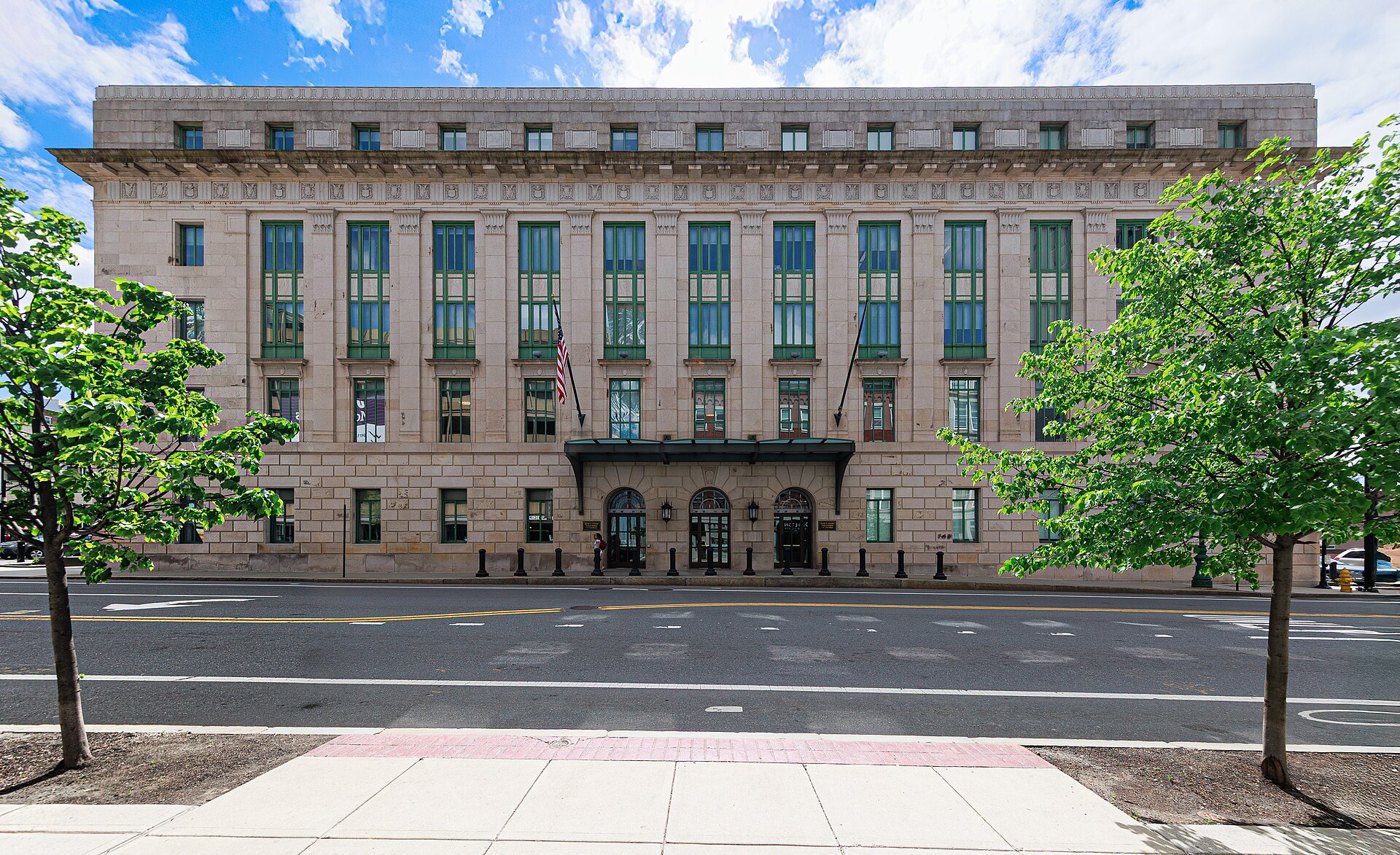
The Harold D. Donohue Federal Building and U.S. Courthouse, 595 Main Street, Worcester, Massachusetts. Photo: Kenneth C. Zirkel, CC BY-SA 4.0, via Wikimedia Commons.
What the Court’s Own Docket Says
The court’s version is the clerk’s note, docketed as entry 80 at 1:16 that afternoon. It says the court “reviewed the status of the case with the parties.” It says the court “then addressed Attorney Adam Clermont about appearing as Plaintiff’s counsel in a legal publication after being terminated as her counsel by the Court,” and ordered me to file a declaration “that he will not hold himself out as representing Plaintiff in any of the current cases.” As if I ever had.
After more than twenty-five years in practice, that implication is the only stain on my record. Next to my name it lists “limited appearance.” It was limited. I appeared only because I was told I had been ordered to, by an order I was never shown, directed at a Hong Kong solicitor sitting in Hong Kong, with no apparent regard for the jurisdiction in which he practices. The word contempt is not in it. Neither is any earlier order I was supposed to have violated, and the docket contains no motion for contempt and no order about my absence on November 20 other than the clerk’s note itself. A declaration went on the docket the next day, entry 81.
The Complaint to the First Circuit
On October 12, I filed a complaint with the First Circuit under 28 U.S.C. section 351, asking its Judicial Council to examine the transcript, the docket and the correspondence. I am not asking anyone to reverse a ruling; that is a different procedure, and I know the difference. I am asking whether, on a Friday morning, supervising a case turned into something else. The complaint also raises statements another lawyer made to me about a close social relationship between his family and the judge. I have no independent knowledge of that relationship and I make no accusation about it. I have asked the Judicial Council to look into it, and I have invited that lawyer to correct my recollection. He has not responded.
The Advertising That Never Stopped
A company that had learned what happens when a bottle meets a flame would stop telling people to put the two together. In May 2025, within two weeks of the fire in Worcester, the brand’s recipe account, DIY with Everclear, posted instructions for citronella candles. “The secret to keeping mosquitoes and other bugs away this summer? Citronella fueled by Everclear.” It told readers to “drop your floating wick, and carefully light it.” On July 29, 2026, MGP told investors it expects to spend 13 to 14 percent of branded spirits sales on advertising and promotion this year, and that it is building its “digital marketing” capabilities. Everclear, management said, grew 13 percent “reflecting increased consumer engagement in key consumption occasions.” The label has not changed since 2018. The warning is still a strip on the back.
To the Young Woman in Florida
On the night before the October 9 hearing, Morgan & Morgan telephoned to tell me that another young woman had been injured in a similar Everclear incident at a Florida fraternity party in November 2025. That was the month Luxco asked the court to stop me from showing people what Everclear does near a flame. I do not claim one caused the other.
I do not know your name. I want to say this to you anyway. I am sorry. When you learn the whole story, I hope you will see that at least one person tried. A person from Adams, Massachusetts. Not the one who is the State Fire Marshal, whose job title suggests he should have been the one. The one Hong Kong adopted, who would rather not have to say sorry again. And I hope you reach out to Yvette. She knows exactly what you are going through, and she has turned it into a reason to become a lawyer.
Hong Kong Did What America Would Not
Here is what I would ask Professor Roach to weigh. In Hong Kong, I wrote to the Fire Services Department on July 8, 2025, two months after Yvette was burned, about a product that is not even sold at 190 proof in this jurisdiction. It answered every email, usually within days. It explained exactly how the Dangerous Goods Ordinance treats high-proof spirits.
After a flambé accident in Causeway Bay injured two women, it reviewed what happened at my request, issued a revised fire safety condition for restaurant seating areas covering flambéing, and wrote to tell me that “details of the accidents that occurred in Causeway Bay and the United States will be shared in various meetings with stakeholders and trade practitioners,” to remind the industry “to pay close attention to the flammability of high-alcohol-content beverages.” Nobody in Hong Kong told me I was being uncivil.
This is what it looks like when a government cares about the people it serves. In Hong Kong, I helped instruct the private prosecution that, on September 10, ended in the conviction of the publisher of the Wall Street Journal for unlawfully deterring a journalist from exercising her trade union rights. I speak to the press here about my cases. I argue for universal suffrage here. No Hong Kong judge has ever ordered me to take down a video warning people about a danger.
Who do I write to in the United States to make a company stop marketing the equivalent of gasoline for use around open flames? Not Jon Davine, the State Fire Marshal and a man I grew up with in Adams. Not the ABCC. Not the Attorney General. Not the alcohol regulators of fourteen other states and the District of Columbia. Not the Consumer Product Safety Commission. Not Judge Guzman, who did not want to hear about the latest victim in Florida and muted me when I tried to tell her that another young woman had just been burned, telling me she did not care about my agenda.
Professor Roach, you and I have both sat in the rooms where these decisions get made. We know how the conversation goes. It is a cost-benefit analysis, in language shareholders understand: what a recall costs, what a new label costs, what a settlement costs, and what it costs to let the next fire happen. We also know how cases against powerful institutions are worn down, one dismissed claim at a time, until what is left is affordable. In this case, the sales ban and the consumer protection claim went first.
China, for its part, has a record of acting first. On March 11, 2019, the day after the Ethiopian Airlines crash killed 157 people, China’s aviation regulator grounded every Boeing 737 MAX 8 in its fleet, the first national regulator to do so. The FAA followed on March 13, after most of the world. Boeing’s defenders said China was acting for political reasons, which is what gets said whenever China moves first and turns out to be right. This July, China turned back Australian mung bean shipments after glyphosate residues tested about five times over its limit. In the United States, the glyphosate news this summer was a petition from a Monsanto company asking for duties on Chinese glyphosate. One government was protecting consumers from the chemical. The other was protecting the chemical from competition.
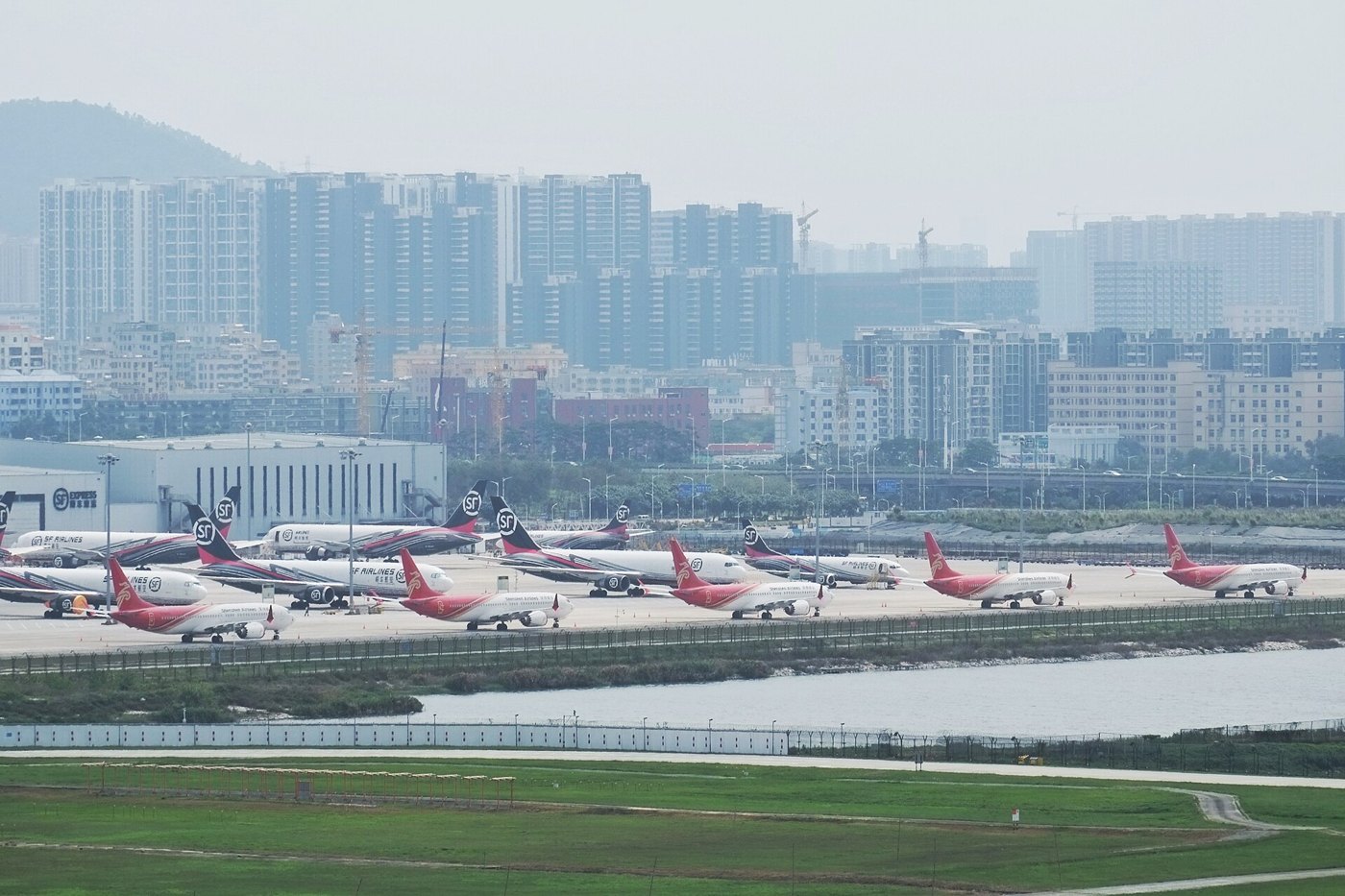
Grounded Boeing 737 MAX 8 aircraft at Shenzhen Bao’an airport, March 31, 2019. Photo: Windmemories, CC BY-SA 4.0, via Wikimedia Commons.
The United States of Old
When I say the United States of old is over, I mean something specific. I mean the country that cared about workers, that had unions with teeth, that cherished free speech and protected due process. I was taught that country at Boston University, a few years after Judge Guzman was. One of us lost our way, and I do not think it was me. I am still in the trenches, as I was in the Worcester courtrooms where she and I both started. The America I was raised on was the one where people stood up together against injustice, at lunch counters and on bridges, and accepted arrest rather than look away. It was a country that admired the person who warned others, not the one who silenced him.
I have written at length before about Expeditors, a company that advertised a no-layoff policy for thirty years. It put the promise in glossy reports to investors and recruited on it. When business slowed, it kept its billions in cash and found reasons to get rid of thousands of people. The answer my clients, workers who believed the promise and were fired, got from another federal court in Massachusetts was, in effect, that no worker should have relied on such a promise. Now companies cut jobs and credit artificial intelligence, and there is no safety net under the people who fall. The bottom line has become the bottom line. Unions were replaced by promises, and the promises turned out to be empty. Everclear is the same story in a bottle.
The Western Capital Roach Wants for Hong Kong
Go back to Roach’s argument. Hong Kong’s IPO revival did not count, he said, because the money and the issuers were Chinese, and the Western capital that once defined the city had gone. The implication is that Western capital is the gold standard, the mark of a market with good rules.
Look at what that capital looks like up close. MGP Ingredients is a Nasdaq company worth about $313 million, down about 39 percent in a year. It bought Luxco for about $475 million and has since written down $152.6 million of what it bought. Its whiskey business is in a glut. The bright spot it offers investors is Everclear, up 13 percent, sold with the flame warning taken off the front, promoted for candles and cooking, and defended in court by asking a judge to stop a lawyer from showing people what it does near a fire. It faces a lawsuit seeking $70 million, about a fifth of the company’s value, and several more burn cases besides. Its July earnings call never mentioned them.
Hong Kong does not need that kind of capital. No market does. If Western capital is the standard, then the standard has to include the rules that come with it, and in this case the rules let a company take a warning off a bottle and promote it for use near open flames, but let a court order down a warning video made from the very same advertising.
What I Am Asking Professor Roach to Say
I know of no connection between you and MGP, and I am not suggesting one. You are an economist whom investors, executives and regulators read, and you have said you write to provoke a response. You held Hong Kong to the standard of Western capital and Western courts. I am asking you to hold this Western company and this Western court to the same standard.
Look at the label that lost its warning, the advertising beside open flames, the burned young people, and the regulators who went quiet. If you conclude that these are not the business practices that a well-run market rewards, that they are bad for MGP’s share price and bad for the reputation of American capital, say so, in public, in one sentence. I suspect that may be all it would take. The people who decide what Everclear’s advertising looks like answer to their shareholders in a way they have never answered to me, or to the State Fire Marshal, or to the Attorney General, or, it turns out, to a federal court. And if these are the practices the market rewards, why on earth would Hong Kong, or China, welcome this kind of investment?
Tell Me Why I Am Wrong
I do not say the rule of law is dead in America. I say that on one Friday night in Hong Kong I watched a young woman who had been burned over a third of her body sit through a hearing at which her lawyer was accused of contempt over papers he had never seen, and that it only ended when he said he was sorry for daring to tell the press that he disagreed with a decision.
And they say Hong Kong is the authoritarian one. In July, Hong Kong police arrested five people at two independent bookstores on suspicion of selling seditious publications. I have my own views about that case. But each of them was told what they were accused of, and each is entitled to a lawyer and a hearing before a court. In Worcester, I was told I was in contempt of an order I have never been shown. I was muted when I tried to defend myself. This is the rule of law that America says is dead in Hong Kong.
Judge Guzman is capable of great sympathy, and I mean that kindly. Earlier this year, after sentencing a Worcester couple for sex trafficking, she tried to pass the young woman they had trafficked an envelope with a handwritten card, a bracelet and several seashells, according to the Boston Globe. It was a kind impulse, and it cost the case dearly: another federal judge later vacated the sentences. I do not hold the kindness against her. I only notice that Yvette has received no card. No word of sympathy from the bench at all. Words matter. And it should not be lost on anyone that Yvette was just standing there.
The State Fire Marshal had the emails and the records. The ABCC had a sincere investigator and talk of emergency regulations. The Attorney General had Chapter 93A. Fifteen other alcohol regulators had my letters. The Consumer Product Safety Commission had the statute and the video of its own. The retailer had my video. The university had the student. A federal court heard the request to pull the product from the shelves and dismissed it, ordered the warning video down and sealed the discovery. The company has the label, the advertising and the choice. Every one of them had the chance. If none of them acts, the next family will read this page to learn who could have, and that is the reason I wrote it.
Professor Roach, you wrote that the Hong Kong of old is over, and you were gracious enough to read the people who disagreed. Read this one too. If you believe this is the Western capital and the Western rule of law that Hong Kong should be measured against, tell me why I am wrong. Tell me why the United States of old is not over. Answer in public, the way you did on August 2. There is a young woman in Florida who may want to hear your answer too.
The court has set the next status conference in Digan v. Luxco for December 15, at 10:15 a.m. Eastern. In Hong Kong, that is 11:15 at night, an hour later than last time, because America still has not settled daylight saving time. I will be awake. Tell me I’m wrong, and tell me why. I want to be.
Sources and Further Reading
- Docket for Digan v. Luxco, Inc., 4:25-cv-40091 (CourtListener)
- Clark University, “I’m going to be fair, and I’m going to bring a different voice,” Jan. 3, 2024
- VinePair on Everclear and grain alcohol
- Log and Moi, “Ethanol and Methanol Burn Risks in the Home Environment,” Int. J. Environ. Res. Public Health 15(11):2379 (2018)
- Massachusetts Rules of Professional Conduct, Rule 3.6: Trial publicity
- Tipsy Bartender, “The Flaming Melon”
- CPSC flame jetting demonstration (video)
- CPSC consumer alert on liquid-burning fire pits and flame jetting
- Law360, “Mass. Judge Trims Law Student’s Everclear ‘Fireball’ Burn Suit,” Sept. 21, 2026
- St. Louis Magazine on the suit against Luxco
- Insurance Journal, July 18, 2025
- MGP Ingredients fourth quarter and full year 2025 results
- MGP Ingredients Q2 2026 earnings call transcript
- Boston Globe, “Judge’s note, gift to victim sparks bid for new trial,” June 27, 2026
- Tipsy Bartender, “Flaming Tree Smacker” (TikTok)
- The Guardian, “Five arrested in Hong Kong bookstore raids,” July 16, 2026
- Stephen Roach’s Substack, Conflict
- Stephen Roach Is Still Wrong About Hong Kong. Here’s Why. (The Escalator)
Comments