On July 1, 1890, in the port city of Bremen, where the Weser River runs to the sea and the dockside air smelled of cotton bales and salt, two men scraped together thirty thousand marks and placed an advertisement in the Bremen Nachrichten announcing a forwarding and commission agency. August Kühne was thirty-five. Friedrich Nagel was his partner. They did not own ships. They did not own warehouses. They did not own railcars. What they owned was a simple insight: the shipper who has freight and the buyer who needs it are separated by something more complicated than distance. They are separated by paperwork, by timing, by trust, and by the particular chaos of perishable cargo moving through a port that serves half a continent. Kühne and Nagel inserted themselves into that gap, pooled consignments, forwarded cotton and glassware, absorbed extra costs when railway cars traveled half full to meet deadlines, and built a reputation for reliability that outlasted both of them.
The Founding and the Stain
Friedrich Nagel died in 1907. August Kühne took over his shares. The Nagel name stayed, the way a co-founder’s name stays when the partnership has already become an identity. August Kühne’s sons Alfred and Werner inherited the business when he died in 1932. The First World War had already disrupted it. The second would scar it permanently. The company’s headquarters in Bremen were destroyed in an air raid in 1944. And during the years between, under Alfred and Werner’s management, Kühne+Nagel participated in the Nazi regime’s M-Aktion, playing a key role in the transport logistics of looted Jewish property from occupied Western Europe to the German Reich, chartering its own steamer to carry the contents of tens of thousands of apartments, armchairs, beds, tables, clocks, a gramophone, two strollers, from Amsterdam to Bremen.
Institutional memory is a selective instrument.
I am mentioning this not because it is directly relevant to a story about layoffs in 2026. I am mentioning it because institutional memory is a selective instrument. Companies decide what they remember and what they forget, and the decisions they make about history tell you something about the decisions they will make about people. Kuehne+Nagel spent decades resisting efforts to memorialize its wartime role. A citizens’ initiative in Bremen, launched in 2015 in coordination with the Jewish community, fought to place a memorial near the company’s new headquarters. The company resisted. The memorial was finally inaugurated in 2022, on public ground, a hundred and fifty meters from the building. The distance was negotiated. One hundred and fifty meters between the company and its own history, close enough to be visible, far enough to be deniable.
One man. Four generations of control.
The man who presided over that resistance, and over everything else the company has become, is Klaus-Michael Kühne. Born in Hamburg in 1937, the grandson of co-founder August Kühne, he joined the family firm in 1958 after an apprenticeship in banking. By 1966, at the age of thirty, he was executive chairman. He sold half the company to the British conglomerate Lonrho in 1981, the year his father died, after a failed shipping venture drained the family’s capital. He bought it back for 340 million marks in 1992 and listed the company on the Swiss exchange two years later. Through Kühne Holding AG, which he solely owns, he controls approximately 55 percent of Kuehne+Nagel International AG. The Kühne Foundation holds another roughly five percent. The family’s effective control approaches sixty percent of all shares. He is eighty-nine years old. He has no children. His wife Christine has been his companion since 1989. They live in Schindellegi, Switzerland, where the company moved its holding structure in 1975. He owns roughly thirty percent of the container shipping giant Hapag-Lloyd. He holds approximately twenty percent of Lufthansa. His net worth, depending on the day’s share prices, fluctuates around thirty-seven billion dollars.
One man. Four generations of accumulated control. The logistics company his grandfather founded with thirty thousand marks is now a twenty-six-billion-dollar enterprise with operations in close to one hundred countries and more than eighty thousand employees. And the eighty-nine-year-old who controls it has never, in sixty-seven years of involvement, relinquished the steering wheel. He stepped back from daily management decades ago, but the board chairmanship has been occupied by his allies, his holding company’s nominees populate the governance structure, and the company’s strategic direction has never moved in a direction Klaus-Michael Kühne did not approve. Activist investors, the kind that forced out C.H. Robinson’s CEO and reshaped Expeditors’ trajectory, have never gained traction at Kuehne+Nagel, because the sixty-percent ownership wall makes an uninvited intervention mathematically impossible. The fortress is architectural, not operational. The old man does not need to run the company. He only needs to own it. And he does.
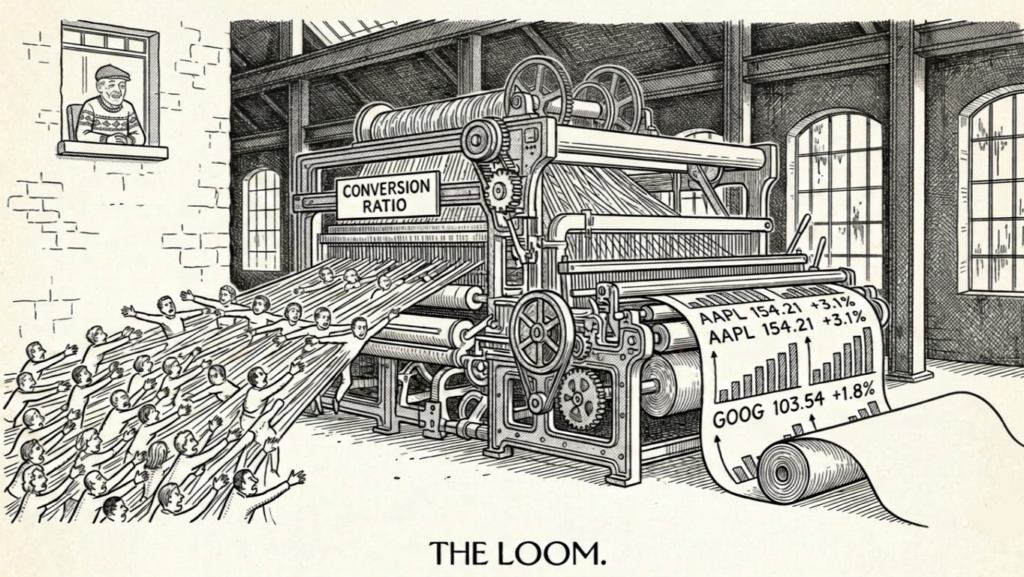
The loom is the structure.
That is the loom on which everything else is woven. You cannot understand what is happening to the people inside Kuehne+Nagel without understanding the structure above them, because the structure determines who the company serves, and the answer, for one hundred and thirty-five years, has been the same. The company serves the family. The employees serve the company. And when the numbers require adjustment, the adjustments are made at the bottom, because the top is bolted shut.
Enter Stefan Paul.
Paul is a freight forwarder. Not an outsider. Not a consultant. Not a man imported from manufacturing or e-commerce or the particular strain of operational thinking that treats people as inputs. He trained as a freight forwarder, started at Kuehne+Nagel in 1990 as a sales executive in sea freight, left in 1997 for Deutsche Post DHL where he rose to become CEO of DHL Freight, and returned to Kuehne+Nagel in 2013 to run road logistics. He was appointed CEO on August 1, 2022, succeeding Detlef Trefzger, who had led the company for nine years through a period of record growth that included the pandemic boom and the acquisition of Hong Kong-based Apex Logistics, which vaulted Kuehne+Nagel to the top of the global air freight market.
The board chose Paul from within. That matters. In an industry where outsider CEOs have been parachuted into companies they do not understand, companies like C.H. Robinson, which hired a manufacturing executive from Amazon to run a relationship brokerage and watched five thousand five hundred people walk out the door, Paul is the anti-Bozeman. He knows the trade lanes. He knows the documentation. He knows what a bill of lading smells like. He knows the customer’s name, or at least he once did. He was promoted, said the board chairman, to ensure “the global strategy and corporate culture will be sustained.”
Sustained. That was the word. And for a while, it looked like the word would hold.
People first.
Paul launched Roadmap 2026, a corporate strategy built on four pillars: an extraordinary customer and employee experience, a digital ecosystem, sustainability, and market expansion. The language was warm. He spoke of trust. He spoke of making employees and customers feel valued. He told the company’s 2023 annual report audience that the Roadmap’s foundation was “making the employee and customer experience extraordinary.” He described his leadership style as from the front, not the top. A colleague recalled receiving handwritten Christmas cards with personal messages. A Responsible AI award the company won in 2025 cited its guiding principle: “People first. Systems are built to empower employees, not replace them.”
People first.
Then came October 2025.
In the third quarter of that year, Kuehne+Nagel reported a 34 percent drop in operating earnings. Revenue fell seven percent. Gross profit adjusted for volatile freight tariffs declined four percent. The market was characterized, in the company’s own language, by overcapacity and pressure on margins. American tariffs had distorted volumes. The dollar was moving. Rates were dropping. And Stefan Paul, the man who spoke of trust and experience and employee empowerment, announced the company would launch a cost-cutting program targeting over 200 million Swiss francs in annual savings. The initial target was one thousand to fifteen hundred positions.
Tech-enabled efficiencies.
By March 2026, when full-year results were released, the number had climbed. The company disclosed it would eliminate more than two thousand full-time positions, saving 150 million Swiss francs. The cuts would target white-collar office roles. Warehouse staffing, the company said, had actually increased in response to growing demand. The white-collar workers, the people who process the documentation, manage the accounts, coordinate the shipments, the people whose knowledge of trade-lane specifics and customs peculiarities and customer temperaments cannot be replicated by software, those were the ones being removed. FreightWaves reported that the headcount reduction was “mostly related to tech-enabled efficiencies and less about soft demand.”
Tech-enabled efficiencies. The phrase is a trapdoor with a carpet over it. Step on it and you fall through into a room where the word “efficiency” means the same thing it has always meant when spoken by a corporation to its workforce: you cost more than the machine, and the machine does not file ethics complaints.
The company had 80,336 full-time employees at the end of 2025, up from 75,241 the year before, a number inflated partly by contract logistics growth and acquisitions. But within that number, the white-collar functions, the air and sea logistics operators, the key account managers, the IT staff, the branch managers, were being hollowed. The Loadstar reported cuts targeting branch managers in the US and UK. Glassdoor filled with reviews from employees describing what the efficiency looked like from the inside. One employee, a director of key accounts with more than five years at the company, wrote of “silent layoffs that are not published” and described them as ongoing for over a year. Another, reviewing the Tallinn IT Center, called the company “one of the most unstable companies in Europe, with frequent unnecessary layoffs and project terminations.” A team leader in Jersey City with more than five years described an experience that was “extremely disheartening and emotionally overwhelming,” of feeling “invisible, undervalued, unappreciated, and taken for granted,” of handling workloads far beyond the position, of compensation that never reflected the effort. And then, months after departure, a message from the company claiming the employee owed money back due to an overpayment.
Months after walking someone to the door, the company reached back and asked for change from the check.
Months after walking someone to the door, the company reached back and asked for change from the check.
The WARN Act filings tell part of the story. Between 2021 and 2025, Kuehne+Nagel filed four WARN notices in the United States, affecting 266 employees across California, Maryland, and Ohio. But WARN notices are blunt instruments. They capture only the cuts large enough and concentrated enough to trigger the filing threshold. The silent cuts, the ones the Glassdoor reviewer described, the ones that happen office by office, country by country, each wrapped in a restructuring narrative too small for a regulatory filing, those do not appear on any tracker. They appear only on kitchen tables.
And while the white-collar workers were being removed, the company was winning an award for Responsible AI. Systems built to empower employees, not replace them. People first. Those were the words on the award. The layoffs were the math underneath the words.
The conversion ratio.
But the math has a context, and the context has a name. It is called the conversion ratio.
In freight forwarding, the conversion ratio is the industry’s governing equation: operating profit divided by gross profit. It measures how much of each dollar of gross margin the company converts into earnings after paying for the people and the overhead that make the business run. At Kuehne+Nagel, the conversion ratio is the number that governs everything, because the conversion ratio is the number that Klaus-Michael Kühne watches, and what Klaus-Michael Kühne watches is what the company optimizes, and what the company optimizes determines who stays and who goes.
In 2022, during the pandemic-fueled freight boom, Kuehne+Nagel’s conversion ratio touched heights the industry had rarely seen. EBIT margins expanded. EPS surged. Revenues exceeded 30 billion Swiss francs. Klaus-Michael Kühne’s net worth crossed forty billion dollars. The company hired. It expanded. It spoke of growth and experience and people first.
Then the boom ended. Rates normalized. Volumes softened. Overcapacity arrived. And the conversion ratio began to compress. By the third quarter of 2025, EBIT had fallen 37 percent. The company’s initial response was what companies always do when the ratio compresses: they squeezed the denominator. Not the freight volumes, which they cannot control. Not the carrier rates, which the market sets. The denominator they squeezed was the people. Because in a non-asset-based freight forwarding business, people are the primary operating cost, and the conversion ratio improves when the people disappear.
The machine does not know their names.
Stefan Paul told journalists in March 2026 that supply chain reliability would become more important. He stressed change management, education, and coaching employees so they know how to manage digital agents. He said the company was using AI to streamline repetitive work and free up employees for complex customer issues. These are true statements. They are also incomplete statements. Because the AI does not merely free up employees. It replaces them. That is the entire point. The two thousand positions being eliminated are not being eliminated because AI freed those workers to do something better. They are being eliminated because AI made those workers unnecessary, and the conversion ratio improves when unnecessary people stop costing money.
The company’s Q1 2026 results confirmed the thesis. EBIT of 343 million Swiss francs. Cost-saving measures from October 2025 had, in the company’s own language, a “material impact” on first-quarter earnings. Costs per unit were “sustainably reduced.” Paul told analysts that the cost reduction program was “running ahead of plan.” The company raised the lower end of its full-year EBIT guidance. The analysts nodded. The stock climbed.
Sustainably reduced. The language is mechanical. The costs that were sustainably reduced were the salaries of human beings with rent and children and the particular dread that arrives when a calendar invite appears from someone you have never met. But the language does not say that. It says costs per unit. It says material impact. It says ahead of plan. The language was designed for a conference call, not a kitchen table, and the distance between those two rooms is the distance between the company’s public narrative and the private experience of the people the narrative is about.
CEO Stefan Paul’s total compensation for fiscal year 2024 was approximately 3.8 million Swiss francs, up roughly ten percent from the prior year. His salary component was about 1.2 million, with the majority coming from bonuses and equity. He directly owns approximately 0.02 percent of the company’s shares, worth several million francs. These are not American-scale CEO numbers. They are not the fifteen million dollars in fourteen months that Dan Wall extracted from Expeditors while cutting 230 people, or the twenty-eight million that Dave Bozeman collected at C.H. Robinson while eliminating 5,500. Swiss executive compensation operates on a different scale, and Paul’s pay, measured against the Swiss market, is roughly average for a company of Kuehne+Nagel’s size.
But the pay is not the scandal. The structure is.
But the pay is not the scandal. The structure is.
Klaus-Michael Kühne’s fifty-five percent stake in a company with a market capitalization of roughly twenty-two billion Swiss francs means his holding is worth approximately twelve billion Swiss francs. Every percentage point improvement in the conversion ratio, every franc of cost sustainably reduced, every white-collar worker whose salary is eliminated and whose work is absorbed by a digital agent, flows through the income statement into the share price and from the share price into the net worth of a man who lives in a village in the Swiss canton of Schwyz, who has no children, whose foundation will inherit everything, and who has spent sixty-seven years ensuring that the company his grandfather founded with thirty thousand marks continues to serve, above all other purposes, the preservation and growth of the family’s capital.
This is not the extraction model that Wall Street invented. This is the extraction model that European dynastic capitalism perfected. It does not require stock buybacks or performance share units or the quarterly earnings theater of American public companies. It requires only majority control, patient compounding, and the understanding that a workforce reduction program that saves 200 million francs per year, every year, in perpetuity, is not a one-time event. It is a permanent increase in the value of the family’s holdings. The two thousand people are not a restructuring cost. They are a capital improvement. Their removal makes the machine more efficient, and the machine’s efficiency is measured in the same currency that fills the Kühne Foundation’s endowment and maintains the superyacht Chrimi III and funds the Kühne Logistics University in Hamburg.
The people are the cost. The family is the return. And the loom keeps weaving.
But here is what the conversion ratio does not measure. It does not measure what walks out the door when a key account manager with fifteen years of trade-lane knowledge updates her LinkedIn profile to “open to work.” It does not measure the phone call that will not happen next Tuesday between a customer in Detroit who is panicking about a delayed semiconductor shipment and the person who used to know that this customer panics and needs a voice, not a tracking update, a voice, saying I am on it. It does not measure the customs broker in Hamburg who knew that the inspector at the port requires the paperwork formatted a particular way, knowledge that exists nowhere in any system, knowledge that lived in a human being and left the building when the human being did. It does not measure what DSV’s former Schenker employees are carrying to their new desks, or what C.H. Robinson’s fired sales reps brought to Kuehne+Nagel’s competitors, or what the Expeditors veterans, the ones who built their careers on a promise that turned out to be vapor, are now offering to anyone who will hire them.
The conversion ratio measures the numerator and the denominator. It does not measure the everything else.
The conversion ratio measures the numerator and the denominator. It does not measure the epsilon, the everything-else that determines whether the ratio is sustainable or whether it is the last metabolic output of an organism consuming its own root structure.
Kuehne+Nagel won the Responsible AI Impact Award in 2025. The award recognized organizations that “exemplify the ethical, sustainable and high-impact deployment of artificial intelligence.” The company’s stated principle was that AI should “augment human potential, not replace it.” Six months later, the company announced it would eliminate more than two thousand people, saving 150 million Swiss francs, using the tech-enabled efficiencies that the award celebrated.
Augment at the ceremony. Eliminate on the call.
People first, the award said. Costs per unit, the earnings call said. Both statements were made by the same company, about the same technology, in the same fiscal year. One was designed for a ceremony. The other was designed for analysts. The ceremony said augment. The conference call said eliminate. And the two thousand people who fell through the gap between those two words are somewhere right now, on a train in Germany, in a car in New Jersey, at a kitchen table in Tallinn, trying to explain to someone who depends on them that the company that won an award for putting people first put them last.
August Kühne and Friedrich Nagel started with thirty thousand marks and an advertisement in a local newspaper. They pooled consignments and absorbed extra costs and kept to schedules. They built trust one shipment at a time, in a port city where the river froze in winter and the sugar had to move by rail when the barges could not. The company they built survived two world wars, a disastrous wartime legacy it has never fully reckoned with, a failed shipping venture, a sale to a British conglomerate, a buyback, and a public listing. It has survived because the business of connecting a shipper who has freight with a buyer who needs it is, at its core, a business of human beings who know things that systems do not know and who care about outcomes that algorithms cannot value.
Two thousand of those human beings have been told their knowledge is no longer worth what it costs. The conversion ratio will improve. The savings will flow through the income statement. The share price will reflect the efficiency. And in Schindellegi, the value of a fifty-five percent stake in the world’s largest sea freight forwarder will tick upward by a fraction that, measured in Swiss francs, exceeds the lifetime earnings of every person who was cut.
The loom keeps weaving.
The loom keeps weaving. The thread is thinner now. The pattern is tighter. The fabric is more profitable per meter than it has ever been.
But the people who used to tend the loom are not in the building anymore. And the loom does not know their names.