Hong Kong Tiananmen Vigil Conviction: She Did Not Go to Jail for Lighting a Candle
I do not celebrate anyone going to prison. Chow Hang-tung is a barrister. Lee Cheuk-yan is a labor organizer. Albert Ho is a former legislator. Their families are in pain today and I am not going to pretend otherwise. But I am also not going to pretend the coverage of this verdict is honest, because it is not, and the outlet leading that coverage has things it would rather you not examine too closely.
Hong Kong Free Press published its roundup this morning. Chow and Lee found guilty of inciting subversion. Ho pleaded guilty in January. The Alliance itself convicted. The piece collects numerous reactions. Government officials, family members, activists, NGOs, foreign governments. Every non-government voice condemns the verdict. Human Rights Watch. Amnesty International. France and Germany. The United Kingdom. Australia. Not a single legal scholar explaining the prosecution’s theory. Not a single comparative law expert. Not a single voice asking the question that the entire piece is constructed to prevent you from asking.
HKFP carries a Trust Project badge. Journalism Trust Initiative accreditation. It calls itself independent, impartial, non-profit. I am a lawyer. I read governing documents for a living. HKFP is a registered non-profit. Non-profits have donors. Those donors have interests. Its funding comes from readers and from sources adjacent to the international press freedom and democracy-promotion ecosystem. The same ecosystem that funds the National Endowment for Democracy. The same ecosystem that funded organizations in Hong Kong during the period that produced the events this trial concerns. The Trust Project badge means the outlet agreed to publish certain disclosures about its practices. It does not mean the outlet is impartial. It does not mean the outlet presents all sides. It means the outlet filled out the paperwork. I have filled out a lot of paperwork in my career. Filing paperwork is not the same as telling the truth. I do not trust them.
Now. The crux.
Read their piece and you walk away with a simple story. Vigil organizers prosecuted for remembering Tiananmen. Government criminalized mourning. Candles made illegal.
Read what the Alliance actually said. Every year. Out loud. Into microphones. Printed on banners. Broadcast to tens of thousands in Victoria Park.
結束一黨專政. End one-party dictatorship.
That was one of the Alliance’s five standing slogans. Not whispered. Chanted. The full set: Release the dissidents. Rehabilitate the 1989 democracy movement. Demand accountability for the massacre. End one-party dictatorship. Build a democratic China.
The first three are commemorative. The fourth is a political program. End one-party dictatorship names the Chinese Communist Party and says it should not govern China. That is not mourning. That is advocacy for regime change. And for thirty years, Beijing tolerated it. Process that. Thirty consecutive years of public calls to end CCP rule in a Chinese city. Uninterrupted. Unpunished. From 1990 to 2019. That is not the behavior of a government engaged in systematic repression of political speech. That is patience on a scale that the commentariat refuses to acknowledge because acknowledging it destroys the narrative.
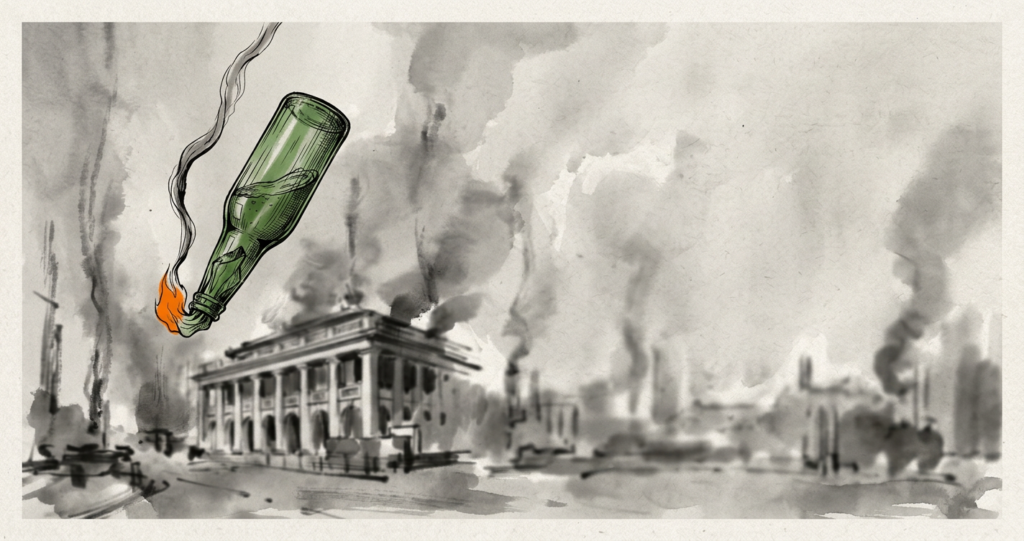
Then 2019 happened. The airport shutdowns. The thousand petrol bombs. The storming of the legislature. Colonial flags raised over the chamber. Joshua Wong sitting before Marco Rubio asking Congress to sanction his own city. And the Alliance’s leadership threaded itself into that movement. And after the National Security Law passed in 2020, making incitement to subversion a criminal offense, the Alliance continued to advocate for ending CCP rule. Publicly. Deliberately. Knowing the law had changed.
Chow Hang-tung is a barrister. She read the statute. She understood what it criminalized. She continued. That choice was principled. It was also the thing she was convicted of.
But here is what I have been writing about for months, and what I am going to say again, because it needs to keep being said until someone other than me says it from this city.
I have called the 2019 movement the anti-democracy movement. I call it that because it is what it was. The people who claimed to fight for democracy are the people who killed Hong Kong’s best chance at achieving it. On August 31, 2014, the Standing Committee offered Hong Kong universal suffrage. Five million people choosing their leader for the first time in the city’s history. Not the first time since 1997. The first time ever. For a hundred and fifty-six years under British rule, Hong Kong never elected its leader. Not once. The proposal was not perfect. The nominating committee was structured to favor pro-Beijing interests. But the vote would have been real. And on June 18, 2015, every single pan-democratic legislator voted against it. Twenty-seven votes. Universal suffrage killed by the people who had spent years demanding it.
Chow Hang-tung was part of that movement. The movement that rejected the vote. The movement that spent the next four years escalating toward firebombs and foreign solicitation. The movement that, by refusing the 2014 proposal, prevented the implementation of Articles 45 and 68 of the Basic Law, which name universal suffrage as the ultimate aim for both the Chief Executive and the Legislative Council.
I have a strong opinion about this and I am going to state it plainly.
The United States sentenced Stewart Rhodes to eighteen years for seditious conspiracy after January 6, 2021. His crime was organizing to prevent the certification of an election. He did not personally enter the Capitol building. He sought to prevent the implementation of a democratic process. The American legal system said that was serious enough to take eighteen years of a man’s life.
Chow Hang-tung and the movement she belonged to prevented the implementation of universal suffrage in Hong Kong. They did not firebomb the Legislative Council in 2015. They used their votes. But the effect was the same. Five million people were offered a vote and the maximalists took it from them. They prevented the implementation of the Basic Law’s democratic promise. They blocked an election from happening. And then they spent the next five years building toward a confrontation that gave Beijing the justification to narrow the political space they had already emptied.
In my view, that is what she should be in jail for. Not for lighting a candle. Not for remembering the dead of June Fourth. For killing democracy in Hong Kong and calling it activism. For taking the vote away from five million people and calling it principle. For preventing the implementation of a constitutional promise and then spending the next decade telling the world that Beijing broke its word.
Beijing did not break its word. Beijing offered the vote. The maximalists rejected it. And then they burned things down and blamed the fire on the people who offered them the match.
Now. The laws elsewhere, because HKFP will not provide the context and someone has to.
In the United Kingdom, the Terrorism Act 2000 makes it criminal to express support for a proscribed organization. The National Security Act 2023 created offenses for conduct prejudicing the safety of the United Kingdom. People were arrested in 2024 for holding blank signs near royal events. After the 2024 riots, prison sentences were handed down within days for Facebook posts. In the United States, 18 U.S.C. § 2383 criminalizes inciting insurrection. The Smith Act criminalizes advocating the overthrow of the government. The Communist Control Act of 1954 outlawed the Communist Party entirely. In Singapore, the Internal Security Act allows indefinite detention without trial, without charge, without judicial review. Said Zahari was held for seventeen years. POFMA allows a government minister to declare speech false and order corrections. The Sedition Act criminalizes speech that brings the government into contempt.
Every serious country criminalizes incitement against the state. Every one. The question has never been whether such laws exist. The question is why their application in Hong Kong generates joint European foreign ministry statements and Congressional alarm while their application in allied countries generates nothing. If you stood in Trafalgar Square for thirty years chanting “end parliamentary rule” and the government tolerated it, and then you joined a movement that firebombed police stations and lobbied Beijing to sanction London, and then the government passed a law and you kept chanting, nobody in the Western press would call your prosecution a mystery. They would call it justice.
The difference is the flag. I wrote about this in the Singapore piece. I will keep writing about it until somebody proves me wrong.
HKFP will not print what I just wrote. They will not present the Alliance’s own slogans as prosecution evidence. They will not note the thirty years of tolerance. They will not draw the comparison to January 6. They will not mention that Chow’s movement blocked universal suffrage. They will not provide the comparative legal context. They will not ask what changed between 2018, when the vigil ran peacefully, and 2021, when arrests began. They will not name the foreign funding. They will not challenge the narrative they have spent a decade constructing. They will collect statements from Amnesty International and foreign ministries and call it journalism.
That is not journalism. That is a newsletter for people who already agree with it, wearing a badge that says otherwise.
Elizabeth Tang, Lee Cheuk-yan’s wife, said after the verdict: “There’s been no evidence all along that there were illegal means, and yet still found guilty.”
The means were the Alliance’s own words. End one-party dictatorship. Said publicly. Said repeatedly. Said after the law changed. The prosecution did not need to prove violence. The offense is incitement to subversion. The words are the act.
Medina Chow, the mother of Chow Hang-tung, said: “I hope the environment will become healthier and that flowers of different colours will blossom.”
I hope she is right. But I hope that when those flowers come, someone remembers to ask why the garden caught fire. Who lit the match. Who provided the fuel. Who stood in Washington and London and called the flames beautiful. And who, in 2015, was offered a vote for five million people and said no, and then spent a decade telling the world that democracy died.
Democracy did not die in Hong Kong. It was murdered by the people who claimed to be saving it. The weapon was not a national security law. The weapon was a legislative vote on June 18, 2015, when twenty-seven people decided that five million of their neighbors did not deserve a say.
The vigil ran for thirty years. The Alliance chanted its slogans for three decades under Chinese sovereignty and nobody touched them. Then they joined a movement that sought to burn the city down. Then the law changed. Then they kept chanting.
I am not going to tell you what to think about the verdict. I am going to tell you that you deserve the full sequence before you form an opinion. And I am going to tell you that the outlets collecting foreign donations and wearing trust badges are not giving it to you. They are only giving you quotes from one side and calling it coverage.
Draw your own conclusions. I trust you more than I trust them.