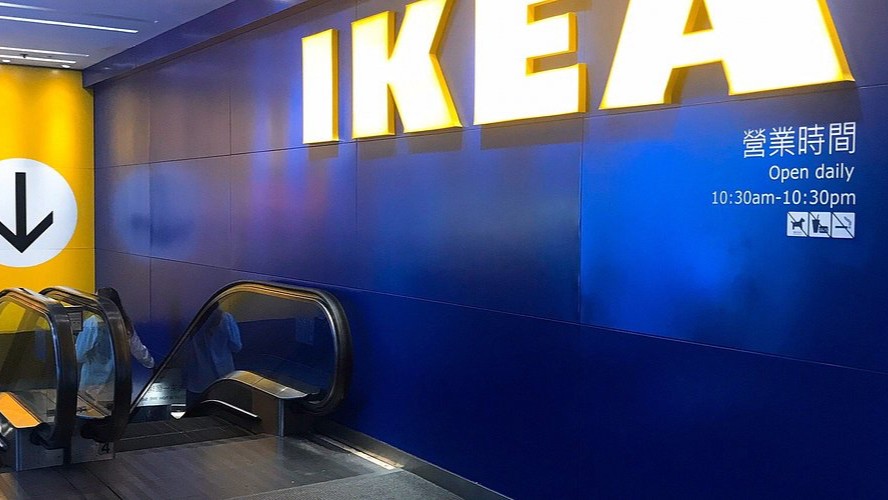
IKEA is a furniture store. In Hong Kong, it is something closer to a pilgrimage.
I need to be honest about something. I went to IKEA on a Saturday. In Causeway Bay. Voluntarily.
If you have lived in Hong Kong for any length of time, you already know that every word of that paragraph represents a separate failure of judgment. Any one of those choices could be forgiven in isolation. Together, they constitute the kind of decision that makes your friends tilt their heads and ask if everything is okay at home.
Everything was fine at home. That, in fact, was the problem. We had moved into a new flat, and the flat needed a shelf. One shelf. My wife suggested IKEA, and I said sure, because in every other city I have lived in, IKEA is a straightforward proposition. You drive to a large building on the outskirts of town. You walk through some showrooms. You eat meatballs of uncertain provenance. You leave with a flat-pack box and a moderate sense of accomplishment. Two hours, start to finish.
I would like to be clear that we did not leave IKEA in two hours.
The first sign that this would be a different experience was the queue to get in. Not to the checkout. Not to the restaurant. To the store. A line of human beings, snaking through a roped-off corridor, waiting patiently for the privilege of entering a shop that sells tea towels and pine bookshelves. I looked at my wife. She was already on her phone.
“Is it always like this?”
“It’s Saturday,” she said, in the same tone she might use to explain that water is wet.
We entered after fifteen minutes, carried forward by the current of bodies like debris in a river, and emerged into the showroom floor. I use the word “showroom” loosely. In most countries, IKEA showrooms are aspirational. They are meant to make you think, yes, I could live like this, in this tastefully arranged studio with the linen curtains and the small cactus on the windowsill. The rooms are compact but airy. The lighting suggests calm. The message is: your life could be this organized.
In Hong Kong, the showrooms are aspirational for a different reason. They are, in many cases, larger than actual apartments.
I am not exaggerating. IKEA’s model studio flat, their smallest configuration, the one designed to demonstrate that you can live comfortably in a very tight space, is roughly 300 square feet. In Hong Kong, 300 square feet is not a tight space. In Hong Kong, 300 square feet is a two-bedroom. I have been to dinner parties in apartments smaller than IKEA’s display bathroom. The showrooms aren’t selling a fantasy of organization. They’re selling a fantasy of square footage.
This might explain why people were lingering. And I do mean lingering. Families were sitting on the display sofas having full conversations, as if they had just moved in and were discussing what to watch on the television that did not exist. A man was lying on one of the showroom beds, shoes off, eyes closed, in a state of repose that suggested he had been there for some time and had no immediate plans to leave. Two teenagers were doing homework at a display desk. A child was opening and closing a display kitchen drawer with the rhythmic determination of someone conducting a long-term durability study.
Nobody working at the store seemed troubled by any of this. The showrooms weren’t being visited. They were being inhabited.
I tried to stay focused. We were here for a shelf. One shelf. I repeated this to myself like a mantra as the crowd carried us deeper into the labyrinth.
Because that’s what IKEA is, of course, a labyrinth. Every IKEA in the world is designed so that you cannot walk in a straight line from the entrance to the thing you want. You must follow the path. You must see the kitchens and the bedrooms and the living rooms and the inexplicable section where they sell fake plants. You must be exposed to every product category before you are allowed to reach the warehouse. This is true globally. It is a known feature of the IKEA experience.
But IKEA’s maze was designed for countries where people have personal space.
In Causeway Bay on a Saturday, the maze becomes something else entirely. The arrows on the floor, those cheerful guides meant to keep traffic flowing in one direction, are treated as suggestions in the same way that speed limits are treated as suggestions on the red minibus. People move forward, backward, sideways. Trolleys collide. Children appear from nowhere. An elderly couple stands motionless in the middle of a walkway, studying a set of drawer organizers with the intensity of scholars examining a newly discovered manuscript, while the entire population of Wan Chai attempts to flow around them.
I lost my wife somewhere near the bathroom accessories. One moment she was beside me. The next, a family of five had inserted themselves between us, and the current had separated us, and she was gone. I didn’t panic. I had my phone. I sent a message. She replied: I’m in the kitchen section. Near the tap displays.
I looked up. I was in the kitchen section. I was, in fact, standing next to the tap displays. I could not see her. There were simply too many people between us. We were ten feet apart and in functionally different postcodes.
Forty-five minutes into our shelf-buying expedition, we had not looked at a single shelf. We had, however, acquired a basket. This is the second law of Hong Kong IKEA, the first being that you will never leave on time. The second is that you will buy things you did not come for. The basket starts empty. Then someone puts in a pack of napkins. Then a kitchen utensil that costs twelve dollars and seems useful. Then a scented candle, because it was right there, and it smelled nice, and this is how they get you. The basket is a trap. The basket has always been a trap.
We eventually reached the shelf aisle, selected the shelf, and wrote down the warehouse location number with the small pencil that IKEA provides for this purpose. The pencil is the same in every country. It is the one universal constant.
Then my wife said the words I had been dreading.
“Should we eat?”
The IKEA restaurant in Hong Kong is not a place you go because you are hungry and it happens to be convenient. It is a destination. People come to IKEA specifically to eat. Not to browse. Not to buy. To sit in a cafeteria on the fourth floor of a furniture store and eat meatballs and soft serve ice cream as if this were a perfectly normal dining choice in a city with some of the best food on earth.
And the thing is, and I say this knowing how it sounds, the food is fine. The meatballs are fine. The chicken wings, which I believe are specific to the Hong Kong menu, are actually quite good. The soft serve costs six dollars and tastes exactly like soft serve should. None of it is remarkable. All of it is enormously popular. The queue for the restaurant was longer than the queue to enter the store, which means that there were people in that line who had waited to get into the building, navigated the entire showroom maze, and were now waiting again, all for the privilege of cafeteria meatballs.
I ate the meatballs. They were fine. The chicken wings were better.
After lunch, we collected our shelf from the warehouse, which in any other IKEA would mean loading a flat-pack box into the back of a car. We did not have a car. Almost nobody in Hong Kong has a car. This is the third thing that IKEA’s global model did not fully anticipate about this city: the last mile.
In Stockholm, you drive to IKEA. In New Jersey, you drive to IKEA. In Causeway Bay, you take the MTR, or the bus, or a taxi that may or may not agree to take you depending on the size of your box and the mood of the driver. The warehouse section of a Hong Kong IKEA on a Saturday afternoon is a study in logistical improvisation. People are carrying boxes that are clearly too large for any reasonable mode of transport, holding them at angles, strapping them to luggage trolleys, negotiating with taxi drivers on the phone in voices that suggest the negotiation is not going well.
We ordered delivery. It cost almost as much as the shelf. My wife did not comment on this, which I interpreted as compassion.
The shelf arrived on Monday. It took forty minutes to assemble, which, by IKEA assembly standards, means it went smoothly. It fit perfectly in the space we had measured. It looked exactly like the picture. It was, in the end, a very good shelf.
I look at it sometimes and think about what it cost. Not the money. The money was trivial. I mean the Saturday. The queue to enter. The maze. The showrooms full of people living their best lives on display furniture. The meatballs. The logistical puzzle of getting a flat-pack box home in a city where a car is a luxury and a taxi driver’s patience is finite.
In most cities, furniture shopping is an errand. In Hong Kong, it is an endurance event with a food court in the middle.
Here’s what I’ve come to understand. Hong Kong doesn’t do anything at normal scale. The buildings are taller. The crowds are denser. The apartments are smaller. The malls are more labyrinthine. So when you take a global brand like IKEA, designed for suburban car parks and spacious living rooms, and drop it into one of the most compressed urban environments on the planet, something happens. The store doesn’t change. The city changes the store. IKEA in Causeway Bay isn’t really IKEA anymore. It’s a Hong Kong experience that happens to sell Swedish furniture.
The showrooms become living rooms because people need living rooms. The restaurant becomes a destination because Hongkongers will queue for anything they’ve decided is worth eating. The maze becomes a social event because when you put a million people within walking distance of a single store, every outing is a social event whether you planned it that way or not.
We needed a second shelf last month. My wife suggested IKEA. I suggested we order online.
She looked at me with the quiet disappointment of someone who had hoped I would eventually understand this city.
“It’s not about the shelf,” she said.
She was right. It was never about the shelf.