On harbours, holiday lights, and what a city means when it says the mission is complete. Witness the spectacular Light Show that lights up the night.
Every night at eight o’clock, Hong Kong puts on a laser show.
The Light Show is a mesmerizing experience that captivates both locals and visitors alike.
Every night. Eight o’clock. Forty-three buildings on both sides of Victoria Harbour fire searchlights and LEDs into the sky while a soundtrack plays Chinese flutes and the erhu, and the whole production is called A Symphony of Lights, which is the kind of name that sounds like it was chosen by consensus at a tourism board meeting where no one was willing to die on a hill and everyone brought a thesaurus.
It has been running since 2004. Twenty-two years. Longer than most Broadway shows, most marriages in this city, and most of the promises made at any given policy address. Guinness World Records once certified it as the largest permanent light and sound show on earth, a title Hong Kong lost to a show in Jiangxi province and continued to claim on the brochure, because in this city the distance between what is real and what is on the brochure is a distance no one has ever felt the need to close.
I have seen it many times.
I have seen it from the Tsim Sha Tsui promenade, where tourists line up along the railing forty minutes early as though good seats exist for a show performed by an entire skyline. They hold their phones above their heads in that posture of modern devotion, arms raised, screens tilted, capturing something they will never watch again in order to prove they were somewhere they were not really present for, because they were holding their phones above their heads.
I have seen it from the Star Ferry, which is the best seat, because the ferry does not stop for the show, the ferry does not stop for anything, the ferry has been crossing this harbour since 1888 and has the emotional range of a metronome, and watching a laser show from a vessel that refuses to acknowledge the laser show is the most Hong Kong way to experience Hong Kong.
I have seen it from a bar in Wan Chai where the drinks cost more than the performance deserved. The bartender did not look up. He had seen it three thousand times. He had achieved the thing every long-term Hong Kong resident eventually achieves, which is the ability to be completely unmoved by something extraordinary happening outside the window, because in this city the extraordinary happens outside the window every single day and if you reacted to all of it you would never finish your drink.
I watched a woman from Budapest watch it and say, with the quiet devastation of someone who had been promised the Sistine Chapel and received a desktop wallpaper, that she thought it would be bigger. It is performed by forty-three buildings across an entire harbour. She thought it would be bigger. I loved her immediately.
Ruth says it is not very good. Ruth is Cantonese, was born here, could have married a banker, married me instead, a white-collar criminal defense lawyer from the Berkshires who wears shorts to the office in a jurisdiction where barristers still wear horsehair wigs, and her judgment on matters of local taste is final. I do not appeal. I have seen what happens to those who underestimate her. I am not opposing counsel, but I am also not stupid.
She is right. The show is ten minutes. The buildings light up. Lasers move. Music plays. It ends, and you stand there with the quiet sense that you have just watched an earnings presentation delivered by a skyline.
But it was there. Every night. Eight o’clock. You did not have to go. You did not have to watch. You just had to know it was happening, the way you know the Star Ferry is crossing, the way you know the neon on Nathan Road is on, or was on, before that started disappearing too, and the knowing was enough. At eight o’clock, whether you were in Tsim Sha Tsui or Mei Foo or a cha chaan teng in Sham Shui Po arguing with your wife about the thermostat, the harbour was doing its thing. And the doing of the thing was a kind of civic pulse, faint and repetitive and easy to ignore, until it stops, and then you notice you were listening.
In February, the finance secretary told lawmakers the show is being retired. Sometime in the second half of this year.
He said it had completed its historical mission.
I have been a lawyer long enough to know what a sentence is doing when it works that hard. Completed its historical mission. As though the lasers had submitted a thesis, defended it successfully, and been released to pursue other opportunities.
They are replacing it with seasonal light festivals at various locations. The Peak. Central. Christmas, Lunar New Year, Halloween. The word immersive was used. The word immersive is always used in this city when something permanent is being replaced by something temporary and the replacement needs to sound like an upgrade.
At least they are replacing it with something. I say this as a person from a place that does not replace things.
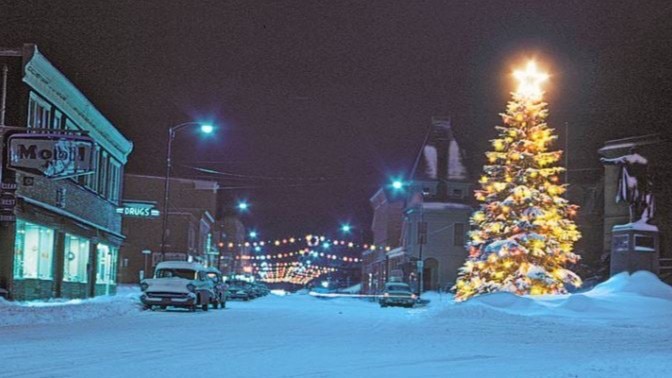
I grew up in Adams, Massachusetts, a mill town in the Berkshires at the foot of Mount Greylock, the highest point in the state. Every Thanksgiving, the town strung holiday lights on Park Street and Summer Street. Nothing that would trouble Guinness. And every Fourth of July, fireworks. A town choosing to decorate itself, which is a town choosing to believe it is worth decorating, and the choosing is its own kind of light.
When I was eight, the lights and fireworks stopped. Budget cuts. They did not come back the next year or the year after that. I am writing this from a high-rise in Kowloon over forty years later. The holiday lights on Park Street went dark when I was a child and they never came back on. Nobody said they had completed their historical mission. Nobody offered immersive seasonal replacements. The lights stopped, the stopping became the ordinary, and the ordinary became permanent, and I grew up in a town that used to choose to be beautiful and could no longer afford the choice.
They have been talking about developing the Greylock Glen for my entire lifetime. Tramway. Ski resort. Lodge. At one point, a casino. A new developer every few years, a new rendering in the paper, a new round of promises. They finally built something last year, a visitors center at the foot of the mountain, after fifty years of false starts. Beautiful building. Net-zero energy. Dramatic views. Nobody uses it. The campground, the amphitheater, the lodge, still plans. And anyone who has watched the Glen cycle through half a century of announcements knows what plans at the Greylock Glen are worth. They are the most renewable resource in Berkshire County. They cost nothing to produce, regenerate on contact with a press conference, and sustain an entire ecosystem of hope and artist’s renderings that will never be built.
A city that lights itself up every night is a city that has decided it is worth lighting up. The decision is the point. Not the show. Not the lasers. Not the ten minutes of erhu and LEDs that a woman from Budapest found underwhelming. The decision. The nightly, stubborn, unnecessary insistence on doing something beautiful for no reason other than that the city can, and because a city that stops insisting is a city that has started leaving even if no one has packed.
Adams stopped insisting. The mills closed. The lights stayed off. The fireworks never came back. And the most beautiful visitors center in western Massachusetts sits at the foot of the tallest mountain in the state, mostly empty, waiting for visitors who are not coming, because a building is not an argument, a building is a building, and what the town needed was not a building but the willingness to keep the lights on, and the willingness left when the lights did, and neither one came back.
Hong Kong is replacing its show. This city fills gaps the way Adams fills grant applications, reflexively, compulsively, before the gap has time to become permanent. At least there will be something. Seasonal, intermittent, not the same, but something. The harbour will light up on certain nights, for certain reasons, and the tourists will hold their phones in the air, and the brochure will be updated.
But there will be no eight o’clock. No every night. No pulse.
The show is still running. It is summer. Sometime between now and December, the last performance will happen, and forty-three buildings will stop doing something together, which is different from forty-three buildings, and the difference was the whole point.
Tonight, at eight o’clock, the harbour will light up. The tourists will hold their phones above their heads. A woman from somewhere will think it should have been bigger. The bartender in Wan Chai will not look up. Ruth will not watch. I will not watch.
But I will know it is happening, the same way I knew, when I was seven in Adams, Massachusetts, that the lights were up on Park Street whether I walked downtown or not.
I didn’t walk downtown. The lights were still there.
That was the year before they weren’t.