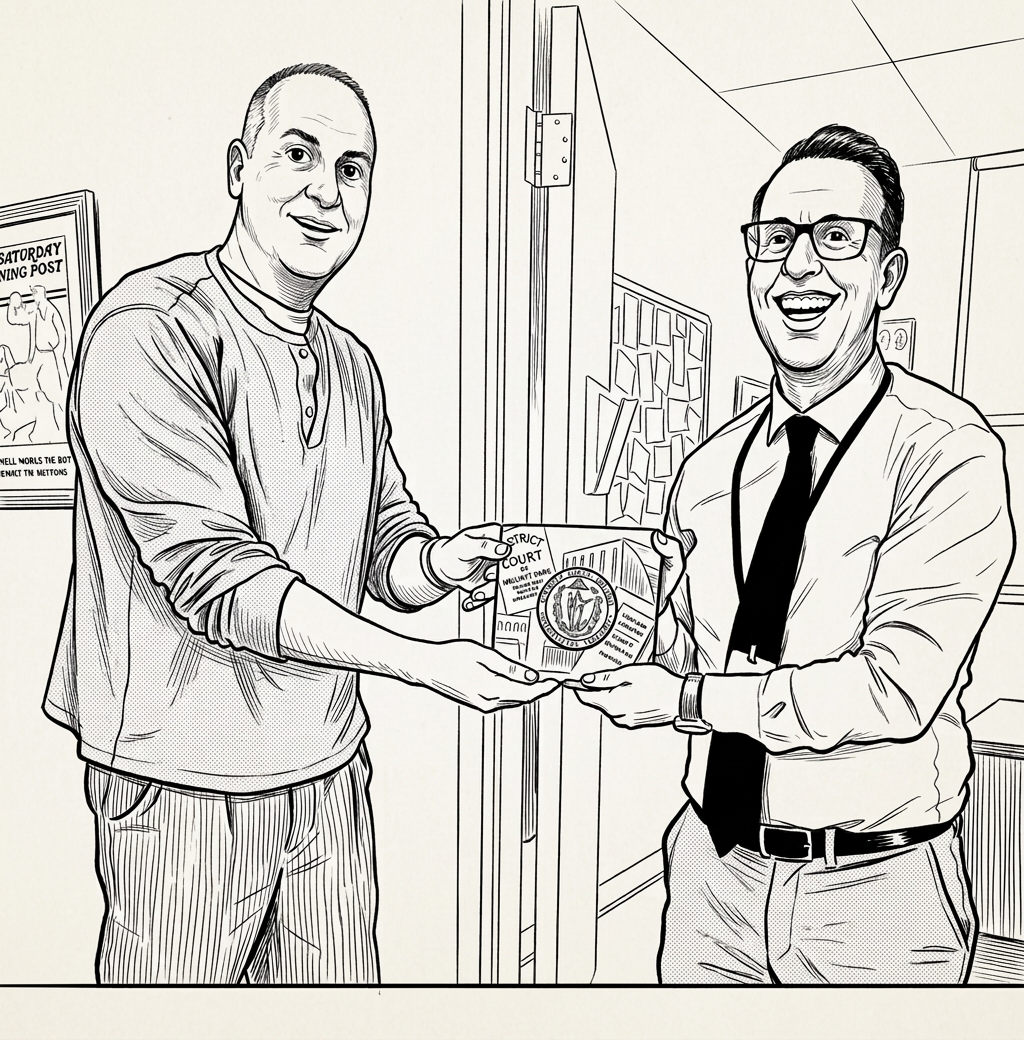
There is a building on Holden Street in North Adams, Massachusetts, that has had exactly two clerk-magistrates in forty-eight years. Mark Trottier ran it from 1978 to 2001. Tim Morey ran it from 2002 until last month. Two men. Half a century. One small courthouse, the Northern Berkshire District Court, serving ten towns where the mountains are taller than the buildings and the docket is a census of everything a community does to itself when things go wrong.
I knew the courthouse, the Northern Berkshire District Court, before I knew the law. I grew up with Mark Trottier’s son. Spent time at their house the way you spend time at houses in Adams, which is to say constantly, without announcement, through whichever door was closest, into a kitchen where someone was always home and nobody asked why you were there because your being there was not a question that required answering. That was Adams. That was every house. But this house belonged to the man who ran the courthouse on Holden Street, which was previously located in North Adams City Hall, and I did not understand what that meant when I was young, because when you are young in a town of eight thousand people, the clerk-magistrate of the district court is not a title. He is someone’s father.
He is the man whose kitchen you sit in.
He is the man who is home when you come through the door, or who is not home because he is at the courthouse, which is across the street from the building that used to make capacitors for the space program and now holds contemporary art, and the sentence I just wrote would not make sense in any other town on earth and makes perfect sense in North Adams.
Mrs. Trottier told me once, stop by anytime. She meant it the way people in Adams mean things, which is completely and without limit. So I did. At seven in the morning. When they were still in bed. It became a running joke, the kind that only works because the people on the receiving end of it love you enough to find it funny rather than criminal. I would show up at seven, ring the bell or knock or just stand on the porch until someone heard me, and they would still be asleep, and I would wake them up, and they would throw open the door with open arms as if I had arrived at a perfectly reasonable hour, as if this were normal, as if a man in shorts appearing on your doorstep before dawn was exactly what they had been hoping for when they said stop by anytime.
And then we would sit. For hours.
Chatting about nothing, or everything, and the hours felt like minutes because that is what happens in a house where you are wanted without condition.
I still had coffee with Mark and his wife every time I went home. Every trip. It was not negotiable. It was not something I scheduled around other things. It was the thing other things were scheduled around, the way the North Street Grille is the thing other things are scheduled around when I am in Boston. You come home. You sit down. You have coffee. You talk about nothing in particular, or everything in particular, and the talking is not the point. The sitting is the point. The continuity is the point. The same door that opened at seven in the morning when I was a kid still opened decades later, same warmth, same kitchen, same two people, as if no time had passed at all. In a house like that, time does not pass. It just piles up around the table.
She has since passed away, Mrs. Trottier. And that table is different now. I miss the door thrown open. I miss the hours. I miss a woman who said stop by anytime and meant it at seven in the morning in her bathrobe with no coffee made yet and a man on her porch who should have known better but was loved too much to be corrected. That is the thing about Adams. The doors were open. Not metaphorically. Literally, physically open, thrown wide by people in pajamas who had every right to be annoyed and chose instead to be delighted. That is the town I come from. That is the courthouse I come from. A place where the doors opened for you whether or not you had the sense to arrive at a decent hour.
The doors were open.
Mark had a great temperament. I say that plainly because it matters for what comes later. He started as a probation officer in 1969, which means he spent nine years working with people after the system had already decided what to do with them, learning what happened to people after the gavel fell, watching the consequences play out in real time, in real houses. Then Dukakis appointed him clerk in 1978, and he brought that knowledge with him. The knowledge of what happens downstream. The understanding that a courthouse is not the end of a story but the middle of one, and the middle is where you can still change the ending if you pay attention.
He ran that courthouse for twenty-three years with the patience of a man who had seen the full arc. Who had been the probation officer knocking on the door, and then became the clerk administering the hearing, and understood that the person on the other side of the counter was going to be someone’s neighbor again in six months regardless of what happened today. He was fair. He was steady. He set the temperature of that building. And the temperature he set was human.
I practiced across the street from the courthouse.
My office was in Mass MoCA, the old Sprague Electric factory that someone had the audacity to turn into a contemporary art museum, which means that for a period of my career I walked past enormous abstract installations on my way to draft motions, and I never once found this strange, because nothing in North Adams is strange if you have been there long enough. The building that houses the art used to make capacitors for the space program. The building across the street that houses the court used to hold the people who built the capacitors. Everything in that town has been repurposed at least twice. The buildings endure. The uses change. The people remain.
Tim and I were in the same firm, which is how I came to practice with him before he became the clerk. This is not unusual in northern Berkshire County. The legal community is small enough that everyone has practiced with everyone, or against everyone, or shared a coffee pot with everyone, and the distinctions between those three categories are less meaningful than they would be in a city where lawyers do not bump into each other at the Price Chopper holding identical bags of ground beef.
Then he crossed the street and became the clerk-magistrate and I eventually crossed an ocean and became whatever I am now, which is a man in shorts writing essays about two cities from a flat in Mei Foo. But I never stopped going back. Every time I visited Adams, every trip home, I walked into the Northern Berkshire District Court the way other people walk into their mother’s kitchen. Not because I had business there. Because it was the only courthouse in the world that felt like family.
It was the only courthouse in the world that felt like family.
I have practiced in courtrooms on numerous continents. I have appeared before judges in Hong Kong who wear horsehair wigs imported from a country that left twenty-seven years ago. I have stood in tribunals where the formality is so dense you could choke on it, where you address the bench in a specific cadence and sit in a specific chair and God help you if you forget which one. I have been in rooms where the law is performed like opera, where every gesture is choreographed and every word is weighed before it leaves your mouth.
Northern Berkshire District Court was not that.
The old public defenders wore sport coat casual, which in Berkshire County means a blazer over whatever shirt was clean and shoes that may or may not have been the same shoes they mowed the lawn in. The formality of the place was exactly calibrated to a community where the judge might have coached your kid’s Little League team and the defendant might be your neighbor’s nephew and everyone in the room understood that court was not a place people came because their lives were going well. Court was a place people came because something had broken. The breaking was your cousin. The breaking was the kid who used to bag your groceries. The breaking was someone whose mother you saw at the post office last Tuesday, and she looked tired, and now you know why.
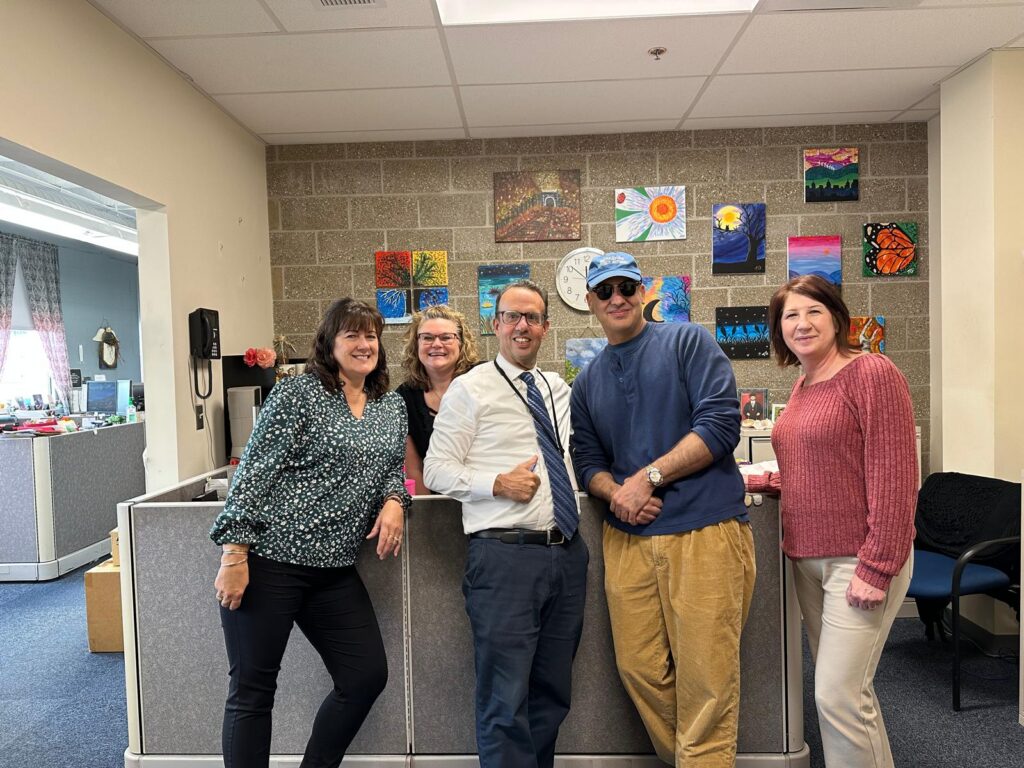
Tim understood this. In his own words, and I am quoting because I cannot improve on them: “I tried hard to be fair and make the court user friendly for everyone.” User friendly. Nobody says that about a courthouse. The law schools certainly do not teach you to say it. But Tim said it, and he meant it, and he spent twenty-four years proving it, and the proof was in the show cause hearings.
“I tried hard to be fair and make the court user friendly for everyone.”
A show cause hearing is where the clerk-magistrate decides whether a criminal complaint has enough basis to issue. It is not a trial. It is not a conviction. It is the threshold question, the moment where the system decides whether to begin. I had plenty of show cause hearings in front of both Mark and Tim. Justice was always done. Not the kind that looks good on paper. The kind that actually resolves something. The kind where people go home and the problem is smaller than it was when they walked in.
Tim administered them like Solomon, which is to say he listened. He listened to both sides. He asked the questions the lawyers had not thought to ask. He found the thing underneath the thing, the neighbor dispute that was really about a fence that was really about a divorce, the noise complaint that was really about loneliness, the harassment claim that was really about two people who used to love each other and now could not be in the same room. He found it, and he named it, and then he resolved it, because he had been watching people come through that door for decades and had learned that the legal question was almost never the real question.
Richard Taskin said Tim defused enough situations at the counter of the court to qualify for a Nobel Peace Prize. I was there for some of those. I saw people walk in ready to burn the building down, convinced the system owed them blood, and I saw Tim bring the temperature down with nothing more than his voice and his willingness to treat them like a person who deserved to be heard. Not agreed with. Heard. In a city, you get processed. In that courthouse, you got heard.
Now Tim is retired. Mrs. Trottier is gone. The courthouse on Holden Street will get a third clerk-magistrate, and whoever it is will not have been a probation officer in 1969, and will not have shared a coffee pot with the defense bar, and will not have grown up in a town where the judge bags his own groceries at the same store as the defendant. Whoever it is will arrive with credentials and training and perhaps even good intentions, and none of that is the same thing as knowing that the noise complaint is really about loneliness. You cannot train that. You cannot appoint it. It is the product of two men who lived in the community they served for so long that the line between the courthouse and the town dissolved entirely, until there was no difference between the door Mrs. Trottier threw open at seven in the morning and the door Tim opened at the clerk’s counter for a man who had never been in trouble before and was terrified. Same door. Same town. Same act of saying, with no hesitation and no judgment: come in, sit down, let me hear it.
Come in, sit down, let me hear it.
That is what fifty years of continuity buys you. Two men who understood that a courthouse in a small town is not an institution. It is a kitchen table. And the people who sit at it deserve coffee, not processing.
It is a kitchen table.
I do not know if that survives them. I hope it does. But I would not bet on it, because the thing that made it work was never the building. It was never the system. It was Mark Trottier throwing open his front door in his pajamas, and Tim Morey throwing open the clerk’s window with the same spirit, and both of them treating the law as if it were something that belonged to the people who walked through the door, not something that happened to them. That is gone now, or going. And I am thousands of miles away, writing about it in shorts.